Showing posts with label Five Star. Show all posts

Thursday, March 31, 2016

Guest post: Wrapping up Filmart 2016

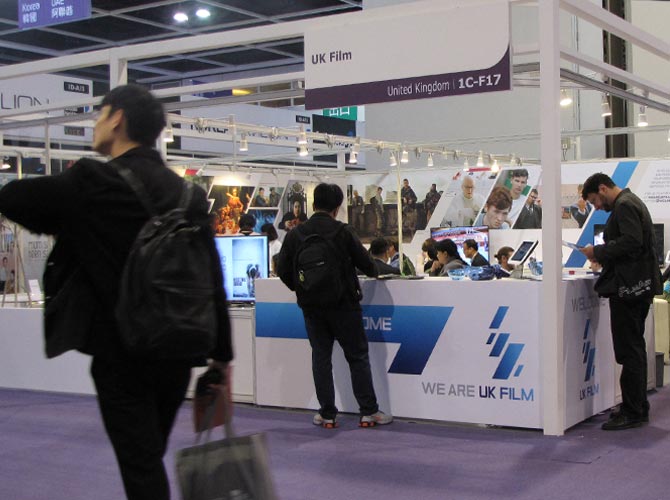
Booths at Filmart. Photo by Keith Barclay.
Keith Barclay is editor of the New Zealand film industry publication Screenz. A sponsored journalist covering Filmart, he offers Wise Kwai's Thai Film Journal tailored coverage of Filmart, the Hong Kong-Asia Film Financing Forum and the Asian Film Awards.

Hong Kong's Filmart wrapped on March 17. With 800 exhibitors and 7,300 registered buyers, the event set a new attendance record on the occasion of its 20th edition. It's a long way from the 75 invited exhibitors who took part in the inaugural 1997 event. Filmart is Asia's largest entertainment market event by some distance. Depending how it's measured, it's one of the world's top three or top five.

Strongly supported over the years by Hong Kong's own production and distribution community, a solid core of Thai distributors has been doing business there for several years. There are also several distributors from elsewhere carrying Thai product as part of a broader offer.

The most prominent Thai distributors at this year's Filmart were Five Star and Mono, each carrying a catalog of the more commercial Thai fare – mostly horrors, comedies and romantic comedies. Mono presented a large amount of its TV product as part of its offer. Both stands were busy during the market.

Five Star had Achira Nokthet's Ghost Ship (มอญซ่อนผี, Mon Son Phee) and Surussavadi Chuarchart's F.Hilaire (ฟ.ฮีแลร์), both released in Thai cinemas last year. Also in Five Star's catalogue, although a little older, was Issara Nadee's 2012 feature 407 Dark Flight. Thailand's first 3D horror feature, it has other Hong Kong connections having been shot by another of Filmart's regular exhibitors, Percy Fung's Hong Kong-based 3D Magic.

Representing the Thai government, the Thailand Film Office was one of a number of film offices from the region looking to attract business, productions looking to shoot in Asian locations or use services in the region. This year, the Thai team had a number of bites at the cherry with two umbrella organisations specializing in film attraction also exhibiting. AFCNet, the Asian organisation formed out of the worldwide International Association of Film Commissioners (AFCI) had a stand, as did Film Asean which, as it says on the box, represents the interests of the 10 member countries of the Association of Southeast Asian Nations. Film Asean arrived in Hong Kong having made a good splash at its launch at the Berlinale's European Film Market in February.

The organization has been in development for four years, and has set both outward and inward-facing goals. In Southeast Asia, Film Asean will offer services including a touring mini-festival to introduce films from other countries in the region to regional audiences. For industry members, it will also support training and upskilling initiatives to help develop each country's own production capability and to better service the (usually more lucrative) inbound productions.

In 2013 Thailand introduced its own initiative to increase awareness of the country's potential and attract more inbound production. In the face of improving incentive schemes offered by other countries' governments, the Thailand International Film Destination Festival focused on promoting international titles shot in Thailand. Over the years, many of those titles have used Thailand to double for another part of Asia – most frequently Vietnam for a spate of Hollywood war films from Casualties of War to The Deer Hunter.

More recent high-profile titles such as The Hangover and Xu Zheng's Lost in Thailand might help drive awareness of what Thailand has to offer but, as neighbor Malaysia has discovered at the Pinewood Iskandar studios, it's not all about the blockbusters. Often the longer-running, lower-profile international titles – especially TV shows – keep people working week in and week out and create better opportunities for developing crew members' skills.

As well as distributors selling product at Filmart, production service companies also promote their services. Thai post-production and visual-effects specialists Yggdrazil and Kantana were both present. While Yggdrazil is probably better known internationally for its work in advertising, Kantana has been well-known in Hong Kong for several years, not least for its work on Wong Kar-Wai's Cannes-premiered 2046.

Other Thai post houses also present in Hong Kong were G2D (the former Technicolor facility in Bangkok) and White Light, which presented prizes at the Hong Kong-Asia Film Financing Forum, which ran alongside Filmart. Sway director Rooth Tang's March April May was among the projects selected for this year's HAF.

Both events form part of the umbrella Hong Kong Entertainment Expo, which draws to a close this weekend with the presentation of the Hong Kong Film Awards and the end of the Hong Kong International Film Festival.

Thai titles playing in this year's HKIFF were Apichatpong Weerasethakul's Cemetery of Splendour, well-travelled since its Cannes premiere 10 months ago, and The Island Funeral by Pimpaka Towira, which won the Best Asian Future Film Award at last year's Tokyo International Film Festival.

Both directors' previous features, Apichatpong's Palme d'Or winner Uncle Boonmee Who Can Recall His Past Lives and Pimpaka's One Night Husband respectively, also played in past editions of the Hong Kong fest.

Filmart (14 – 17 March) ran as part of the Hong Kong Entertainment Expo, along with film financing forum/project market HAF (14 – 16 March), and the Hong Kong International Film Festival (21 March – 4 April).

Wednesday, March 2, 2016

Freelance leads nominations for Subhanahongsas and Bangkok Critics


Hollywood's awards season is over, with the awarding of the Oscars on Sunday night. But now the Thai film scene is gearing up for its own onslaught of trophies, with nominees listed for two major awards, the industry's own Subhanahongsa Awards (รางวัลภาพยนตร์แห่งชาติ สุพรรณหงส์), put on by the Federation of Film Associations of Thailand, and the Bangkok Critics Assembly Awards (ชมรมวิจารณ์บันเทิง).

The leading nominee is Freelance, which is listed in most categories. Other leading nominees include P'Chai My Hero, a.k.a How to Win at Checkers (Every Time), Snap, May Nhai and The Blue Hour. There's an article in The Nation that has more details.

The Subhanahongsa Golden Swan trophies will be given out on March 13 at the Siam Pic-Ganesha Theatre in Siam Square One, while the Bangkok Critics Assembly Awards will held on March 23 at the Royal Thai Army Club.

Ready for this? Here are the nominees for both awards.

25th Thailand National Film Assocation Awards nominees

Best Film

  • Snap
  • P’Chai My Hero
  • Freelance Ham Puay Ham Phak Ham Rak More
  • Arpatti
  • Onthakan


Best Director

  • Josh Kim, P’Chai My Hero
  • Nawapol Thamrongrattanarit, Freelance
  • Anucha Boonyawatana, The Blue Hour
  • Chayanop Boonpakob, May Nhai


Best Actor

  • Sunny Suwanmethanon, Freelance
  • Toni Rakkaen, Snap
  • Thiti Mahayotharak, May Nhai?
  • Atthaphan Poonsawas, Onthakan
  • Thira Chutikul, P’Chai My Hero


Best Actress

  • Davika Hoorne, Freelance
  • Ploy Sornnarin, Arpatti
  • Pimchanok Luevisadpaibul, 2538 Alter Ma Jive
  • Waruntorn Paonil, Snap
  • Sutatta Udomsilp, May Nhai


Best Supporting Actor

  • Krisana Panpeng, Snap
  • Torpong Chantabubpha, Freelance
  • Ingkarat Damrongsakkul, P’Chai My Hero
  • Thanapop Leeratanakajorn, May Nhai
  • Obnithi Wiwatanawarang Onthakan
  • Sorapong Chatree, Arpatti


Best Supporting Actress

  • Duangjai Hiransri, Onthakan
  • Nareekul ketprapakorn, May Nhai
  • Pympan Chalayanacupt, Arpatti
  • Violette Wautier, Freelance
  • Arpa Phawilai, Mae Bia


Best Screenplay

  • Kongdej Jaturanrasamee, Snap
  • Josh Kim, P’Chai My Hero
  • Nawapol Thamrongrattanarit, Freelance
  • Anucha Boonyawatana and Wasuthep Ketpetch, Onthakan
  • Chayanop Boonpakob, Vasuthorn Piyarom, Nottapon Boonprakob, Thodsapon Thiptinnakor, May Nhai


Best Editing

  • Kamontorn Ekwatanakij, P’Chai My Hero
  • Chonlasit Upanigkit, Freelance
  • Panayu Kunvanlee, May Nhai
  • Chonlasit Upanigkit and Anuphap Autta, The Blue Hour
  • Kamontorn Ekwatanakij and Manussa Worrasingh, Snap


Best Cinematography

  • Charnkit Chamnivikaipong, F Hiliare
  • Uruphong Raksasad, Phleng Khong Khao (The Songs of Rice)
  • Niramol Ross, Freelance
  • Chaiyaphruk Chalermpornpanich and Kamonphan Ngewthong, Onthakan
  • MR Ampornpol Yukol, Snap


Best Recording and Sound Mixing

  • Kantana Sound Studio, Freelance
  • Kantana Sound Studio, May Nhai
  • Noppawat Likhitwong/ Onecool Sound Studio, Onthakan
  • Sarawut Phantha Akrichalerm Kalayanamitr, Snap
  • Ram Intra Sound Studio Arpatti


Best Art Direction

  • Rasiguet Sookkarn, Snap
  • Phairot Siriwath, Freelance
  • Phairot Siriwath, Onthakan
  • Akradej Kaewkote, May Nhai
  • Salinee Khemjaras, Tee Wang Rawang Samut (The Isthmus)


Best Original Score

  • Chaibandit Peuchponsub, Snap
  • Bodvar Isbjornsorn, P’Chai My Hero
  • Hualampong Riddim, Freelance
  • Hualampong Riddim, May Nhai
  • Chupvit Temnithikul Onthakan


Best Song

  • Ther Dern Khao Ma from Runpee
  • Mai Me Ther, from Latitude 6
  • Nhai Nhai from May Nhai
  • Sai Tai from 2538 Alter Ma Jive
  • Sud Sai Ta from The Down


Best Documentary

  • Y/our Music
  • The Down
  • The Songs of Rice


Best Costume Design

  • Suthee Muanwaja, May Nhai
  • Phim Umari, Rujirumpai Mongkol, P’Chai My Hero
  • Wasitchaya Mojanakul, Mon Love Sib Muen
  • Wasana Benjachat, Freelance
  • Sukanya Maruangpradit, F Hiliare


Best Make Up Effects

  • Benjawan Sroy-in, Freelance
  • Methaphan Pitithunyapat, Phee Ha Ayothaya
  • Pongrat Kijbamrung, F Hiliare
  • Pattera Puttisuraseat, Runpee
  • Sivakorn Suklangkan, Arpatti


Best Visual Effects

  • Surreal Sutdio, Arpatti
  • Thanan Chimprasert, Mon Son Phee (Ghost Ship)
  • Thosaporn Poonnart, Phee Ha Ayothaya
  • Alternat Studio, Runpee
  • Yggdrazil Group Co and Riff Animation Studio, May Nhai


Lifetime Achievement Award

  • Jaroen "See Thao" Petchjaroen


25th Bangkok Critics Assembly Awards nominees

Best Film

  • Snap
  • P’Chai My Hero (How to Win at Checkers (Every Time))
  • Freelance Ham Puay Ham Phak Ham Rak More (Heart Attack)
  • May Nhai Fai Raeng Fer (May Who?)
  • Onthakan (The Blue Hour)


Best Director

  • Josh Kim, P’Chai My Hero
  • Nawapol Thamrongrattanarit, Freelance
  • Anucha Boonyawatana, Onthakan
  • Uruphong Raksasad, Phleng Khong Khao (The Songs of Rice)
  • Chayanop Boonpakob, May Nhai


Best Actor

  • Jason Young, F Hilaire
  • Sunny Suwanmethanon, Freelance
  • Thiti Mahayotharak, May Nhai
  • Atthaphan Poonsawas Onthakan
  • Ingkarat Damrongsakkul, P’Chai My Hero


Best Actress

  • Davika Hoorne ,Freelance
  • Taya Rogers, Love Sucks
  • Pimchanok Luevisadpaibul, Cat A Wabb # Baeb Wa Rak Ah
  • Waruntorn Paonil, Snap
  • Sutatta Udomsilp, May Nhai


Best Supporting Actor

  • Danai Jarujinda, Arpatti
  • Thira Chutikul, P’Chai My Hero
  • Thanapop Leeratanakajorb, May Nhai
  • Obnithi Wiwatanawarang, Onthakan
  • Soraphong Chatree, Arpatti


Best Supporting Actress

  • Duangjai Hiransri, Onthakan
  • Nareekul ketprapakorn, May Nhai
  • Ploy Sornarin, Arpatti
  • Violette Wautier, Freelance
  • Arpa Phawilai, Phee Ha Ayothaya


Best Screenplay

  • Kongdej Jaturanrasamee, Snap
  • Josh Kim, P’Chai My Hero
  • Nawapol Thamrongrattanarit, Freelance
  • Anucha Boonyawatana and Wasuthep Ketpetch, Onthakan
  • Chayanop Boonpakob, Vasuthorn Piyarom, Nottapon Boonprakob, Thodsapon Thiptinnakorn, May Nhai


Best Editing

  • Uruphong Raksasad, The Songs of Rice
  • Kamontorn Ekwatanakij, P’Chai My Hero
  • Chonlasit Upanigkit, Freelance
  • Panayu Kunvanlee, May Nhai
  • Chonlasit Upanigkit and Anuphap Autta, Onthakan


Best Cinematography

  • Phuttipong Aroonpheng, Vanishing Point
  • Uruphong Raksasad, The Songs of Rice
  • Niramol Ross, Freelance
  • Chaiyaphruk Chalermpornpanich and Kamonphan Ngewthong, Onthakan
  • Kittipat Jinathong, Arpatti


Best Art Direction

  • Vikrom Janpanus, Vanishing Point
  • Rasiguet Sookkarn, P’Chai My Hero
  • Ek Iemchuen, F Hilaire
  • Phairot Siriwath and Chaiwat Boonsoongnern, Freelance
  • Phairot Siriwath and Vitune Tulakorn, Onthakan


Best Original Score

  • Wuttipong Leetrakul, The Songs of Rice
  • Bodvar Isbjornson, P’Chai My Hero
  • Hualampong Riddim, Freelance
  • Hualampong Riddim and Vichaya Vatanasapt, May Nhai
  • Chupvit Temnithikul, Onthakan


Best Song

  • Jai..Jai from Kyushu...Laew Phrung Nee Rao Khong Ja Roo Kan
  • Phra Arthit Thiang Khuen
  • from Water BoyyYorm from Khuen Nan
  • Rao Me Rao from Khun Thongdaeng: The Inspirations
  • Sud Sai Ta from The Down


Best Documentary

  • Y/our Music
  • The Guitar King
  • Kyushu
  • Mard Phayak
  • The Down
  • The Songs of Rice


Young Filmmaker Award

  • Josh Kim, P’Chai My Hero
  • Kanittha Kwunyoo, Arpatti
  • Jakrawal Nilthamrong, Vanishing Point
  • Surussavadi Chuarchart, F Hilaire
  • Anucha Boonyawatana, Onthakan


Lifetime Achievement Awards

  • Marasri Israngkool Na Ayuthaya
  • Sompong Wongrakthai

Friday, January 22, 2016

Festival, festival! Forgotten masters in Vesoul


Rarely shown classic Thai films, some that were believed to be lost, will be shown in next month's International Film Festival of Asian Cinema in Vesoul, France.

Among those nearly-lost masterpieces in the festival’s "Forgotten Masters of Thai Cinema" is the so-called Citizen I (Thongpoon Khopko Rasadorn Temkan), MC Chatrichalerm Yukol’s 1977 drama about a poor taxi driver from Isaan struggling to retrieve his stolen cab from Bangkok thugs. It’s been compared to the Italian classic The Bicycle Thieves, and it spawned a sequel, Citizen II, which is more commonly in circulation, thanks to a home-video release in Thailand. The newly restored version of Citizen I will make its world premiere in Vesoul.

Programmed by Bastian Meiresonne, who was assisted in tracking down his titles by the Thai Film Archive and some studios, particularly Five Star Production, the "Forgotten Masters" range from 1940’s anti-war historical epic King of the White Elephant (พระเจ้าช้างเผือก, Prajao Changpeuk), produced by statesman Pridi Banonmyong, up to Wisit Sasanatieng’s 2000 homage to 1970s Thai action films, Tears of the Black Tiger (ฟ้าทะลายโจร, Fah Talai Jone).

Both those films, as well as Citizen I and many others, are listed in the Thai Culture Ministry’s Registry of Films as National Heritage.

Others at Vesoul include 1957’s rollicking comedy Country Hotel (โรงแรมนรก, Rong Raem Narok), by pioneering auteur RD Pestonji and Permpol Choei-arun’s Muang Nai Mhok (เมืองในหมอก, a.k.a. A Town in Fog), a taut 1978 drama loosely based on Albert Camus’ The Misunderstanding.

Permpol’s 1978 followup, the drama Pai Daeng (ไผ่แดง , a.k.a. Red Bamboo), about a monk in conflict with his communist childhood friend, will also screen, along with another socialist-leaning tale, 1981’s On the Fringes of Society (ประชาชนนอก) by Manop Udomdej.

Celebrated auteur Cherd Songsri will be represented by his gender equality story from the Rama IV era, 1994’s Amdaeng Muen Kab Nai Rid (อำแดงเหมือนกับนายริด, a.k.a. Muen and Rid), and writer-director Vichit Kounavudhi will have his 1982 rural drama Luk Isaan (ลูกอีสาน , a.k.a. Son of the Northeast).

And among the directors in focus is Euthana Mukdasanit, who will be part of the international jury. His films include the at-one-time-banned 1977 socialist drama Tongpan (ทองปาน), his 1985 Deep South childhood tale Butterfly and Flowers (ผีเสื้อและดอกไม้, Peesua lae dokmai) and the rarely seen 1978 musical romance Angel of Bar 21.

Others taking part in the festival will be South Korean director Im Sang-soo as jury president and Thai producer Donsaron Kovitvanitcha on the Netpac jury. Thai Film Archive deputy director Sanchai Chotirosseranee will also be on hand.

The Vesoul International Festival of Asian Cinema runs from February 3 to 10.

Stayed tuned for another "Festival festival!" entry on the newer films making the rounds in places like Rotterdam and Berlin.

(Cross-published in The Nation)

Thursday, October 29, 2015

In Thai cinemas: Ghost Ship, Love Arumirai

It's Halloween weekend, so studios, distributors and theater chains have all conspired to cram horror films down our throats whether we want them or not.

Along with a mixed bag of tricks that includes Scouts Guide to the Apocalypse, the nu-horror Regression and yet another Ju-on movie, there's a couple of Thai films.

Among the local offerings is Mon Son Phee (มอญซ่อนผี, a.k.a. Ghost Ship), which has venerable Thai studio Five Star Production getting back into the water.

Set aboard a cargo ship, the story plays on that ancient nautical notion that women are bad luck at sea, and the superstitious crew have much to fear when they find the corpse of the captain's wife boxed up in the hold. Spooky stuff starts happening as the boat heads into a storm.

It's the feature debut by Achira Nokthet, who previously served as an art director on Tanwarin Sukkhapisit's It Gets Better and the horror-comedy films of Poj Arnon (he even helmed a segment of Poj's Tai Hong Tai Hian).

Sean Jindachote stars, along with Phuwadon Wetchawongsa, Akkarin Akaranithimetrath and gay-film cult actor "Fluke" Pongsatorn Sripinta.


The other Thai entry in local cinemas is Love Arumirai, which seems to be taking a page from the recent Amazon series Red Oaks, which had an honest-to-goodness body-swap episode.

The story has to do with the seven-year marriage between Geng (Phisanu Nimsakul) and fashion model Bella (Cheeranat Yusanon) turning stormy. The bickering husband and wife face their toughest test yet when they wake up one morning and get a shock when they go to the mirror.

Seree Phongnithi is the screenwriter on this feature from start-up shingle Munwork Production.


Apart from the spooky offerings, Thailand's new Documentary Club offers a demonstration of counter-programming that is also complementary, bringing in the Oscar-winning 2008 documentary Man on Wire, which is the story behind the death-defying 1974 high-wire stunt by Philippe Petit at New York's World Trade Center. It's a slice of history that has made a comeback thanks to Robert Zemeckis' The Walk, which is a dramatization of Petit and his stunt. But while the phobia-inducing 3D camerawork of The Walk earned accolades, the movie bombed at the box office and was slapped by a backlash from critics, who urged viewers to instead seek out Man on Wire.

That new release and others are covered at the other blog.

Friday, October 16, 2015

From World War I to Love of Siam, 25 Thai films added to historical registry

The Siamese Military in the First World War

Another 25 titles have been added to the growing list of “Films as National Heritage” by the Culture Ministry and the Thai Film Archive, ranging from 1918 footage of soldiers going off to battle in World War I to puppy-love romance between teenage boys in the 2007 drama The Love of Siam.

Updated each year on October 4, which is Thai National Film Preservation Day, the historic-film registry now numbers 125 titles.

Many of the entries this year are from the U.S. Information Service, the propaganda arm of America's diplomatic corps. These include Thai Army Goes to Korean War, which shows Thai troops joining the fight against communism, and Heritage from King Mongkut, which recounts the contributions of American missionary and physician Dan Beach Bradley.

USIS also made The Ordination of the King, documenting the ceremony by which His Majesty King Bhumibol entered the monkhood.

The growth of commercial Thai cinema is represented by entries from the 1970s through the 1990s, ranging from director Piak Poster’s erotic island romance Choo, to Baan Phi Pob 2, the second film in the popular horror-comedy franchise, which had villagers endlessly running around and screaming and they tried to escape the gut-stabbing ghost-granny Pob Yip.

Ta-mone Prai

Aside from Piak, other notable filmmakers on this year’s list are Manop Udomdej, with 1981's On the Fringe of Society, Cherd Songsri with his 1983 sibling-rivalry romance Puen-Pang, Bhandit Rittakol and his 1987 farming drama Duay Klao, Pen-ek Ratanaruang with his 1999 black comedy Ruang Talok 69 and Jira Maligool with his 2002 Nong Khai festival yarn Mekhong Full Moon Party.

Historical battle epics now become history themselves, with the inclusion this year of Thanit Jitnukul’s Bang Rajan from 2000 and MC Chatrichalerm Yukol’s Suriyothai from 2001.

And recent global hits are represented by 2003’s martial-arts drama Ong Bak, which introduced Tony Jaa to the world, and GTH’s 2004 thriller Shutter, which introduced Thai horror to the world.

Here's the list, which is translated by Thai Film Archive deputy director Sanchai Chotirosseranee, who also offered commentary on some of the more-obscure entries.

Ngoa Ba
Films as National Heritage 2015


  1. The Siamese Military in the First World War (unofficial title) / ภารกิจทหารอาสาสยามในสงครามโลกครั้งที่ ๑, 1918/63.26 min. – King Rama VI sent 1,233 Siamese volunteer soldiers to join World War I in 1917. According to newspaper ads from the era, the film was shown in Siam in 1919. It was thought to be lost, but resurfaced last year as France observed the centenary of the war. The French Embassy and the Alliance Francaise exhibited rare photographs and this film footage, which was well-preserved at the archives of the French Ministry of Defense.
  2. The Playful Kids in the Reign of King Rama VII (unofficial title)/เด็กซนสมัย ร.๗, 1927-32)/7 min. – This "found footage" was shot on 16mm. There is no information on who made the film. It shows youngsters putting on a performance for the camera, playing traditional games, dancing, play-fighting and comic acting in the style of Western films, showing the already pervasive influence of film on Siamese society.
  3. Pan-Tai Norasingh/พันท้ายนรสิงห์, 1950/98 min. – Directed by Prince Bhanubandhu Yugala (grand-uncle of MC Chatrichalerm Yukol) with cinematography by then-budding auteur R.D. Pestonji, this is the first theatrical feature of a historical tale that has been adapted many times for theater, film and television. The story, which takes place during the reign of Ayutthaya's King Sanphet VIII, is about an oarsman on a royal barge who loses control of the vessel in strong currents, causing it to hit a tree and become damaged. The king, understanding the difficult conditions, did not wish to punish Norasingh, but the ever-dutiful and devoted sailor insisted that no exceptions should be made, and he was beheaded according to law.
  4. Thai Army goes to Korean War (unofficial title)/ทหารไทยไปเกาหลี, 1951–52)/7.42 min. – The United States Information Service in Bangkok made this clip of Royal Thai Army troops joining the United Nations' "police action" against the communist North Korean invaders.
  5. Heritage from King Mongkut/มรดกพระจอมเกล้า, 1954/60 min. – This USIS dramatization depicted the influential contributions to Thai society of Dr. Dan Beach Bradley, an American Christian missionary and physician, whose close relations with the King Rama IV court helped Western medicine gain acceptance in Thailand. Bradley also published the first Thai newspaper, the Bangkok Recorder.
  6. The Ordination of the King/พระบาทสมเด็จพระเจ้าอยู่หัวเสด็จออกผนวช, 1956/13.42 min. – When His Majesty King Bhumibol entered the monkhood for 15 days in 1956, the USIS was there with its film cameras to record the royal ceremony.
  7. The Commercial of the Monk Coin for 25th Buddhist Century Anniversary/โฆษณาพระเครื่องฉลอง ๒๕ พุทธศตวรรษ, 1957/4.52 min. – Commemorative coins were minted in observance of the 25th Buddhist century anniversary, which the government aimed to use to raise funds to build the massive "Buddhist Vatican" called Phutthamonthon, near Salaya, Nakhon Pathom.
  8. Ta-mone Prai/ทะโมนไพร, 1959/42 min. – King Kong has a starring role this an artifact from a lost era of regional cinema. It was made by a filmmaker in Narathiwat and screened only there and in nearby southern provinces. “Only a few of these films survive,” Sanchai says, adding that the complete movie was 50 minutes but one reel was damaged, leaving just 42 minutes of the tale of triangular romance and a giant ape.
  9. Field Marshal Sarit Thanarat Performing the Duty for His Nation as Head of Government and Military Commander Until He Fell Ill and Died/การปฏิบัติหน้าที่เพื่อประเทศชาติในตำแหน่งหัวหน้ารัฐบาลและผู้นำทางทหารจนถึงล้มป่วยและอสัญกรรมของ ฯพณฯ จอมพลสฤษดิ์ ธนะรัชต์, 1963/25.16 min. – Their Majesties the King and Queen make an appearance, visiting the bedridden military ruler, who in an act of devotion, takes His Majesty's hand and places it over his head.
  10. Yuthana und Siripon Monch auf Zeit/ยุทธนา –ศิริพร, 1963/44.54 min – Another monkhood ordination is depicted in this travelogue documentary by German documentarian Hans Berthel in collaboration with noted lensman Tae Prakardwuttisan, following a middle-class Bangkok couple as they visit tourist attractions. Tae was made a National Artist in film in 1999.
  11. The Spread of Kinship/สายเลือดเดียวกัน, 1966–68/103 min. – Another Cold War relic, made with support of the USIS, this feature-length drama aimed to attack and defame communism.
  12. Choo/ชู้, a.k.a. Adulterer, 1972/145 min. – While he's probably best known for his string of teen-oriented comedies, movie-poster-artist-turned-filmmaker Somboonsuk Niyomsiri, a.k.a. Piak Poster, also made many solidly dramatic films, including this erotic island romance. "Although the film was not successful in term of box-office earnings, it was much-acclaimed and became the Thai representative at the 19th Asia-Pacific Film Festival in Singapore, where it was awarded the special award because of its outstandingly unconventional story," Sanchai notes.
  13. Wai Tok Kra/วัยตกกระ, 1978/122 min. – Here's a Thai cinema “first” – the first commercial feature to have elderly people as central characters, with “actual senior actors, not young, famous actors in makeup,” Sanchai explains.
  14. Ngoa Ba/เงาะป่า, 1980/86.21 min. – Two generations of master filmmakers, Prince Bhanubandhu Yugala and Piak Poster, came together to collaborate on this adaptation of a popular play from the King Rama V era. It's a "Romeo and Juliet" romance taking place in land of the Sakai, an indigenous tribe in the South of Thailand.
  15. On the Fringe of Society/ประชาชนนอก, 1981/90 min. – Manop Udomdej directs this flipside view of all that anti-communist propaganda, with the story of community activists who were wrongly persecuted and killed for their socialist leanings. It was funded by the Roman Catholic charity Caritas Thailand.
  16. Puen-Paeng/เพื่อนแพง, 1983/131 min. – Auteur director Cherd Songsri's best-regarded film is the tragic romance Plae Kao (The Scar). But I saw Peun-Pang several years ago and liked it better. Sorapong Chatree stars as a poor farmboy in 1930s Siam, who is in love with one sister, but the girl's plucky younger sister likes him more. It was another entry in Cherd's campaign to introduce the concept of "Thainess" to this world, which I think he accomplishes with subtlety and sensitivity.
  17. Duay Klao/ด้วยเกล้า a.k.a. The Seed, 1987/107 min. – Like Piak Poster in the 1970s, director Bhandit Rittakol in the 1980s was primarily known for his teen-oriented Boonchu movies. Duay Klao was his attempt at "serious" cinema, and he succeeded. Made in celebration of His Majesty the King's 60th birthday, the drama stars folksinger Jarun Manupetch as a farmer who nurtures a rice crop from a single seed he obtained from the Royal Ploughing Ceremony. A story of drought-hit farmers and opium-growing indigenous people, the movie depicts many of the His Majesty's Royal Projects, including cloud-seeding and crop replacement. The movie had a brief revival run in 2006 to celebrate the King's 60th anniversary of accession.
  18. Baan Phi Pob 2/บ้านผีปอบ 2, 1990/91 min. – This is the second entry in a crazily popular ghost comedy franchise, which for many Thais are the films that defined the '90s. The films all involve hayseed villagers endlessly running around and screaming and they tried to escape the gut-stabbing ghost-granny Pob Yip, portrayed by Natthinee Sittisaman.
  19. 6ixtynin9/เรื่องตลก 69 (Ruang Talok 69), 1999/115 min. – With an iconic poster that features actress Lalida Panyopas pointing a gun into her mouth, I'm not sure Ruang Talok 69 would fly in today's squeamishly conservative and politically correct Thai culture. Directed by Pen-ek Ratanaruang, the biting black comedy is about a desperate jobless woman who comes across an instant-noodle box full of cash outside her apartment. She then haplessly racks up a body count as various thugs try to retrieve the loot.
  20. Bang Rajan/บางระจัน, 2000/118 min. – Produced by Film Bangkok, this was one of the first Thai titles to make global impact during the "new wave" period of the late '90s and early 2000s. Thanit Jitnukul directs the blood-soaked tale of farmers mounting a last-ditch defense against the invading Burmese hoards in 1767.
  21. Suriyothai/สุริโยไท, 2001/142 min. – Directed by MC Chatrichalerm Yukol and supported by Her Majesty the Queen, this epic historical drama recounts the life of an Ayutthaya-era queen who famously took up arms and rode an elephant into battle, and perished in defense of her king. A box office hit that was only recently unseated from the top spot by Pee Mak Phra Khanong, Suriyothai served as the prequel and template for Chatrichalerm's six-film Naresuan saga.
  22. Mekhong Full Moon Party/15 ค่ำเดือน 11 (15 Kham Duean 11), 2002/120 min. – Jira Maligool's charming comedy offers an explanation of the mysterious fireballs that arise from the Mekong River during the annual Full Moon Festival in Nong Khai. While scientists and various experts offer their theories on the phenomenon, there's a local boy and a monk who know the truth.
  23. Ong-Bak/องค์บาก , 2003/104 min. – Directed by Prachya Pinkaew, this is the definitive showcase of the abilities of martial-arts star Tony Jaa and the innovative choreography of Jaa's former mentor Panna Rittikrai, who passed away last year.
  24. Shutter/ชัตเตอร์ กดติดวิญญาณ, 2004/92 min. – Banjong Pisanthanakun and Parkpoom Wongpoom wrote and directed this thriller, which is based on the notion of ghostly images turning up in photos, and has Ananda Everingham as a lensman who is haunted and slowly goes insane. It was one of the first Thai films to get the Hollywood remake treatment.
  25. The Love of Siam/รักแห่งสยาม, 2007/171 min. – Widely acclaimed and winner of dozens of awards, this was the hit that brought gay romance to the Thai mainstream. It was a breakthrough for director Chookiat Sakveerakul, as well as the film’s stars, leading man Mario Maurer, actor-musician Witwisit Hiranyawongkul and the August band.
(Adapted from an article in The Nation)

The Love of Siam

Related posts:


Tuesday, September 22, 2015

Checkers jumps into place as Thailand's Oscars contender

The independent coming-of-age drama How to Win at Checkers (Every Time), a.k.a. P'Chai My Hero (พี่ชาย My Hero) has been chosen to represent Thailand in the 88th Academy Awards.

As announced today in a press release by the Federation of National Film Associations of Thailand, Checkers was picked by an eight-member committee that considered films released in Thai cinemas from October 1, 2014 to September 30 of this year.

Aside from Checkers, other titles that were pondered were the current hit romantic comedy Freelance, the just-released literary-classic adaptation Mae Bia (แม่เบี้ย, a.k.a. The Snake), the gay psychological thriller The Blue Hour (Onthakan, อนธการ), the time-travel comedy 2538 Alter Ma Jive (2538 อัลเทอร์มาจีบ) and the Catholic schoolteacher biographical drama F. Hilaire (ฟ.ฮีแลร์).

However, after much debate and analysis by the committee, it was decided that Checkers "transcended" the other choices, said Weerasak Kowsurat, the committee chairman.

The debut feature by Korean-American director Josh Kim, How to Win at Checkers (Every Time) is adapted from Sightseeing, the short story collection of noted Thai-American author Rattawut Lapcharoensap. The comedy-drama, set against the backdrop of class conflict in Thai society, centers on 11-year-old Oat, a poor orphan raised by his openly gay older brother Ek and their superstitious aunt. With Ek facing the upcoming military draft lottery, Oat takes a big risk to ensure his brother will not be conscripted.

Checkers premiered at the Berlin International Film Festival and has made the rounds on the circuit. It was given the Thai title of P'Chai My Hero (literally My Brother, My Hero) for local release in July. It was produced by an international consortium of filmmakers from Indonesia, South Korea, Thailand and the US, including Thai director-producer Anocha Suwichakornpong.

The film federation's selection has a notable omission from this year's festival circuit, Apichatpong Weerasethakul's Cemetery of Splendour, which has garnered much acclaim since its premiere at the Cannes Film Festival, and more recently in Toronto. However, it has not yet been released in Thailand. Apichatpong's previous feature, the 2010 Cannes Palme d'Or winner Uncle Boonmee Who Can Recall His Past Lives, was submitted for the 83rd Academy Awards.

Checkers is the 22nd Thai entry in the Oscars race for Best Foreign Language Film, which Thailand has taken part in since 1984. None have made the short-list of nominees.

Thursday, July 9, 2015

In Thai cinemas: Y/our Music, F. Hilaire, The Scar International Version


Urban and city beats blend in the tuneful documentary Y/our Music, which finally comes to Bangkok cinemas this week after a spin on the festival circuit.

I've seen it twice, and it kept my toes tapping both times. Directed by David Reeve and Waraluck “Art” Hiransrettawat Every, Y/our Music is a bifurcated look at Thailand's social divide through the benignly harmonious prism of music.

In Bangkok, there's an esoteric blend of city folk, playing Western-influenced folk, jazz and rock, while in the countryside, there are National Artists, performing the traditional Isaan country-folk music of mor lam, on traditional instruments, such as the electric pin (Isaan banjo) and the khaen (Isaan reed pipe).

It's those Isaan sounds that mostly come through, thanks to ever-present transistor radios in market stalls, taxi-cab stereos, masked street performers and, eventually, the Northeastern legends themselves.

Here are the performers:

  • Wiboon Tangyernyong – A Khao San-area optician who developed a worldwide following as a maker of bamboo saxophones.
  • Sweet Nuj – Young musician and indie record label entrepreneur Bun Suwannochin formed a duo with his singer mother-in-law Worranuj Kanakakorn, and they sell their discs online.
  • Happy Band – Following the tradition of The Who, Velvet Underground and Talking Heads, some Bangkok artists thought it'd be a swell idea to create a rock band as an art project. Eventually, they learned to be musicians.
  • Captain Prasert Keawpukdee – A gentleman who sells used violins and Buddha amulets at Chatuchak market, he hosts old-timey fiddle jam sessions on weekends.
  • Nattapol Seangsukon – Otherwise known as DJ Maftsai, he is a DJ who collects old mor lam, luk thung, string and Thai funk, and is the glue that holds this all together.
  • Chaweewan Phanthu – National Artist singer and academic.
  • Chalardnoi Songserm – National Artist singer.
  • Thongsai Thabthanon – Phin master. "Borrowed" telephone wire from American GIs to string up his Isaan banjo and play with rock bands.
  • Sombat Simlhar – A blind virtuoso of the khaen, the Isaan bamboo reed pipe. He lost his sight in early childhood and turned to music, becoming a major recording artist and performer who is still much sought-after.

Critical reception is pretty great. Y/our Music screens at 6.45 nightly until July 22 at the Lido in Siam Square. Rated G


F. Hilaire (ฟ.ฮีแลร์) – The writer of the widely used "Darun Suksa" Thai-language textbook was not Thai at all: he was a French Roman Catholic missionary and schoolteacher. Brother Hilaire was one of the key educators behind Thailand's Assumption College and taught many of the statesmen who would lead the Kingdom into the modern era. His story is recalled with help from a present-day scholar (Pharunyoo "Tac" Rojanawuttitham) who is looking for a new angle as he tries to write a thesis. Jason Young portrays the bearded clergyman teacher. Rated 13+


The Scar International Version – Dramatist ML Bhandevanop "Mom Noi" Devakula's adaptation of the classic tragic romance Plae Kao (แผลเก่า) is back in Bangkok cinemas for one week as The Scar International Version. Adding 40 minutes of further exposition, the longer director's cut premiered at last month's Thai Film Festival in London. Adapted from a novel by Mai Muengderm, The Scar is set in the Bang Kapi countryside of the 1930s, where poor farm boy Kwan is hopelessly in love with Riam, the daughter of a wealthier farming family. The star-crossed romance has been adapted for film and TV many, many times before, including a beloved 1977 film version by Cherd Songsri. This new version stars Chaiyapol Julian Pupart from Mom Noi's Jan Dara remake as Kwan and Davika Hoorne from Pee Mak Phra Khanong as Riam. It's playing at House on RCA.

Wednesday, June 17, 2015

Thai culture comes to Piccadilly in the Thai Film Festival U.K.

Thailand's Ministry of Culture is bringing seven recent films to London in the Thai Film Festival U.K., which runs from June 25 to 27 at the Princess Anne Theatre at the British Academy of Film and Television Arts in Piccadilly, London, home of the Bafta Awards.

A mix of mainstream commercial features, including action and horror, as well as animation plus an independent drama and a documentary, the Thai Film Festival will open with the GTH studio's award-winning drama The Teacher's Diary (คิดถึงวิทยา, Kid Tueng Wittaya), directed by Nitiwat Taratorn starring actress "Ploy" Chermarn Boonyasak, who will both be present for the screening.

Another award-winning entry is indie director Lee Chatametikool's drama Concrete Clouds (ภวังค์รัก, Phawang Rak), which is also part of the Thai Indie Fest being put on by U.K. distributor Day for Night.

Londoners will also get the latest adaptation of Plae Kao (แผลเก่า, a.k.a. The Scar), a Thai literary classic by Mai Muengderm. A star-crossed romance set in suburban Bangkok in the 1930s, it has been adapted many times for film and TV, with Cherd Songsri's 1977 feature being the best regarded. But last year, dramatist and frequent movie-remaker ML Bhandevanov "Mom Noi" Devakula offered his own interpretation, with fresh-faced stars Chaiyapol Julian Pupart from Mom Noi's Jan Dara remake and Davika Hoorne from Pee Mak Phra Khanong as the leads. According to The Nation, Mom Noi has created an "international version" for the London screening, which adds 45 more minutes to the cut that was released in Thai cinemas last August.

Genre-film fans will be paid service with martial-arts star Tony Jaa's swan song with the Sahamongkol studio, Tom-Yum-Goong 2, and from Five Star Production, there's director Tiwa Methaisong's supernatural horror thriller Ghost Coins (เกมปลุกผี, Game Plook Phi).

The painstaking efforts by Thailand's animation industry are featured in The Story of Mahajanaka (พระมหา ชนก ), an adaptation of a devotional tale written by His Majesty the King.

Finally, there's a more-grounded look at contemporary Thai life in Krisda Tipchaimeta's critically hailed documentary Somboon (ปู่สมบรูณ์, Poo Somboon), which follow the extraordinary efforts of an ordinary elderly gentleman as he provides round-the-clock care for his chronically ailing wife of 45 years.

The film fest is part of the Totally Thai celebrations, put together by MiniCult in honor of the 60th birthday of Her Royal Highness Princess Maha Chakri Sirindhorn. Other activities include a classical dance show at Royal Albert Hall tomorrow night – 130 years after a historic khon performance there for Queen Victoria – and Thailand Eye, a contemporary art exhibition at the Saatchi Gallery in November and December.

The film festival is free, but reservations are required. Check Facebook for more details.

Wednesday, June 3, 2015

Last Executioner, Teacher's Diary, I Fine win Tukkata Tong Awards

From left, Don Linder, Tom Waller, Katrina Grose and Vithaya Pansringarm from The Last Exectioner, winner of the best picture and best screenplay prizes. Photo courtesy of Tom Waller.

Snubbed by the Thai film industry's Subhanahongsa Awards, the cast and crew of The Last Executioner were feeling vindicated last night after winning best picture and screenplay at the 30th Surasawadee Awards (รางวัลพระสุรัสวดี) at the Thailand Cultural Center.

Put on by the Thai Entertainment Reporters Association, the long-running movie kudos also gave floral bouquets to The Teacher's Diary  (คิดถึงวิทยา, Kid Tueng Wittaya) and  I Fine ... Thank You ... Love You (ไอฟาย..แต๊งกิ้ว..เลิฟยู้). The actual awards, the Tukkata Tong (Golden Doll) statuettes, will be given out later in the year in royally appointed ceremonies.

Directed by Tom Waller and produced by Handmade Distribution, Tiger Entertainment and De Warrenne Pictures, The Last Executioner (เพชฌฆาต, Petchakat) had been nominated in six categories, including best director, best actor for "Pu" Vithaya Pansringarm, score by Olivier Lliboutry and costumes by Panyawan Nimjareanpong. The fact-based biographical screenplay by Don Linder and Katrina Grose recounted the moral and spiritual struggles of Thai prison guard Chavoret Jaruboon, who executed 55 death-row inmates with his rifle. He was the last to carry out the deadly deed with a firearm before the prison system switched to lethal injection. But he also was haunted by bad karma, which took on the form of various characters, such as David Asavonond's "spirit". The cast also included Penpak Sirikul, Jaran "See Tao" Petcharoen and Somdet Kaew-ler.

The Teachers' Diary was the leading nominee with 15 nods. In addition to best director for Nithiwat Taratorn, the GTH romantic drama about star-crossed teachers at a floating rural schoolhouse was also awarded for cinematography and art direction.

Another GTH picture, the English-tutoring rom-com I Fine ... Thank You ... Love You took the top acting prizes. It starred "Ice" Preechaya Pongthananikorn as a celebrity English-language tutor who agrees to teach a boorish factory worker (leading man Sunny Suwanmethinon) who wants to win back his U.S.-based ex-girlfriend. It had received three nominations, and in addition to the actor trophies, it was also honored for being the top-grossing Thai film of 2014.

Other honors went to the indie financial-crisis drama Concrete Clouds (ภวังค์รัก, Phawang Rak), which had 11 nominations. Apinya Sakuljaroensuk took the supporting actress prize for her brave turn as a young woman who has a fling with a woefully naive guy in a neighboring 1997 Bangkok apartment. Writer-director Lee Chatametikool was among a host of folks receiving special honors.

The supporting actor prize went to Pichaya Nitipaisankul from the Phranakorn horror omnibus Tai Hong Tai Hian (ตายโหงตายเฮี้ยน), in which he played a former monk haunted by an ex-girlfriend. The gory Tai Hong Tai Hian (I'll call it Die a Violent Death 2) also won for hair and makeup.

Three documentaries were among the honorees: The Master, about influential Bangkok bootleg video king Van VDO, with best editing; Somboon, about an elderly husband caring for his chronically ailing wife, with best song, and By the River (สายน้ำติดเชื้อSai Nam Tid Shoer), about a Karen village devastated by lead-mining waste, with best score by the Karen musicians.

Animation and 3D movies were also recognized, with the animated The Story of Mahajanaka (พระมหา ชนก) winning the honor for films paying tribute to His Majesty the King. The devotional fantasy is based on a story written by His Majesty. And Five Star Production's horror omnibus 3AM 3D Part 2 was noted for its special effects and sound.

Leaving empty handed was the romantic comedy-drama Chiang Khan Story (Tukkae Rak Pang Mak, ตุ๊กแกรักแป้งมาก), which scored big at the Bangkok Critics Assembly Awards and the 12th Kom Chad Luek Awards and another leading nominee, Timeline Jodmai Khwam Songjam (Timeline จดหมาย-ความทรงจำ).

The Last Executioner cast and crew. Photo courtesy of Tom Waller.

Here are the winners in the 30th Surasawadee Awards:

  • Best picture – The Last Executioner
  • Director – Nithiwat Taratorn, The Teacher's Diary
  • Actor – Sunny Suwanamethanon, I Fine ... Thank You ... Love You
  • Actress – Preechaya Pongthananikorn, I Fine ... Thank You ... Love You
  • Supporting actor – Pichaya Nitipaisankul, Tai Hong Tai Hian
  • Supporting actress – Apinya Sakuljaroensuk, Concrete Clouds
  • Screenplay – Don Linder and Katrina Grose, The Last Executioner
  • Cinematography – Narupon Chokkanapitak, The Teacher’s Diary
  • Film editing – Nawapol Thamrongrattanarit, The Master
  • Art direction – Akradej Kaewkote, The Teacher’s Diary
  • Costumes – Phoobao Thai Baan: E-San Indy
  • Hair and makeup – Tai Hong Tai Hian
  • Score – By the River (สายน้ำติดเชื้อ, Sai Nam Tid Shoer)
  • Song – “Chan Ja Fan Tueng Ter” by Suphatra Inthonphakdi (Danu Huntrakun, composer), Somboon
  • Sound – 3AM 3D Part 2 (ตีสาม คืนสาม 3D, Tee Sam Khuen Sam Sam D)
  • Special effects – 3AM 3D Part 2
  • Most popular film – I Fine ... Thank You ... Love You
  • Buddhist film – The Story of Mahajanaka (พระมหา ชนก )
  • Lifetime achievement awards – MC Chatrichalerm Yukol, Rong Kaomoonkadee, Aranya Ngarmwong, Thanit Watrothai,
  • Rising stars: Thanapob Leeratanakajorn, Chonthida Asavahame
  • Outstanding director – Lee Chatametikool, Concrete Clouds
  • Popular actor – Sukrit Wisetkaew, The Teacher's Diary
  • Popular actress – Davika Hoorne, Plae Kao (แผลเก่า, a.k.a. The Scar)

(Via Daily News, Matichon)

Monday, March 10, 2014

Streaming: Catch Ploy on Netflix

Following his bigger-budget international co-productions Last Life in the Universe and Invisible Waves, Pen-ek Ratanaruang wanted to make a smaller movie. So in 2007, he came up with Ploy (พลอย), about a jet-lagged Thai-American couple whose bickering comes to a boil when the husband brings a curly headed teenage girl back to their Bangkok hotel room.

The tense thriller made its mark when it premiered at the Cannes Directors Fortnight but was censored for its Thai theatrical release. It then dropped off the map for much of the English-speaking world.

Ploy never got an English-subtitled DVD release, but for the past year or so it has been available for streaming on Netflix.

That's where the AV Club's A.A. Dowd caught it recently. He watched it as part of a series of hotel-themed films for the AV Club, ahead of the U.S. release of Wes Anderson's Grand Budapest Hotel. Here's a snip:

Those seeking a representative introduction to [Pen-ek's] work could do no better than the 2007 relationship drama Ploy, about a married couple whose domestic discontent comes to a head during a sleepless trip abroad. Back in Bangkok for a funeral after several years in the States, restaurateur Wit (Pornwut Sarasin) and his ex-actress wife, Daeng (Lalita Panyopas), retreat to a hotel in the wee hours of the morning. The unspoken tension between them explodes into outright hostility when Wit meets a teenage waif (Apinya Sakuljaroensuk, sporting an afro and a black eye) and invites her to crash in their rented room. From here, the lines separating fantasy and reality begin to blur, as flashes of an erotic, unrelated subplot—and hints of real danger lurking elsewhere in the building – transform the film into more than just another war of the roses.

Ploy is among nearly two dozen Thai-language films available on Netflix. Others include Magnet Releasing's slate of Sahamongkol action films, such as Ong-Bak 2 and Ong-Bak 3. There's also the children's boxing documentary Buffalo Girls, Aditya Assarat's indie drama Wonderful Town, the 2005 historical-musical drama The Overture and GTH's 2003 hit Fan Chan (My Girl). And, there's a weird film that's worth a look, 2002's post-apocalyptic action-comedy Goodman Town.

The roster changes from time to time as licensing agreements expire on older titles. For example, Tears of the Black Tiger, supposedly the Miramax version, used to be available.

Others by Pen-ek that are currently available include Headshot, the under-appreciated Invisible Waves and my favorite of his, Monrak Transistor.

So perhaps there's life beyond Thai cable television after all for Pen-ek's latest effort, the made-for-TrueVisions movie The Life of Gravity (แรงดึงดูด, Raeng Dueng Dood). Maybe subscribers could tip Netflix off to this new film by Pen-ek?

Friday, January 24, 2014

Capsule reviews: Rang (The Parallel), 3AM 3D Part 2

There's probably an anti-abortion message somewhere in Rang (ร่าง, a.k.a. The Parallel) that star Paula Taylor wants you to take to heart. But the social commentary gets lost in a muddled, unevenly paced story about ghosts. Paula, the actress and model with the megawatt smile, became a mother not too long ago and is now serious as heck, and she turns in a solidly dramatic performance here. In Rang, she is drugged by her dirtbag boyfriend and taken to a back-alley abortion clinic. She somehow survives the ordeal, but loses the ability to have children. So she decides to adopt, and she settles on a creepy little girl who has a creepy little doll and a past that is as haunted as Paula's character's is. The girl has been left speechless since she witnessed her shopkeeper mother's violent death at the hands of a thug. A tussle ensued that saw her mother's face smashed into a glass shelf, cutting deep into her cheek. One second the gash is there, the next second it isn't. Then it's there again. After that, the curly-headed mother's fighting spirit apparently went to reside in the curly-headed doll. And anytime anyone threatens the little girl, the fearsome ghost mom with the curly hair and cut on her cheek is there to take care of them. A couple of comical young police detectives in skinny jeans are on the case, and somehow tie everything together. Overall, Rang isn't very scary, though there is decent gore. And the lighting is nice. Released by Golden A Entertainment, it's directed Phon Worawaranyu, previously an assistant director on films by industry veteran Tanit Jitnukul. Rated 18+ (3/5)

The clock has run out on Five Star Production's 3AM series of 3D shorts about horror happenings in the wee hours when ghosts are at their strongest. Following the far-stronger 2012 first batch, 3AM 3D Part 2 (ตีสาม คืนสาม 3D, Tee Sam Khuen Sam Sam D) is an infuriatingly unscary, unsuspenseful mess. It offers little that hasn't been done before, and gimmicky 3D effects that only make things worse. First up is Patchanon Thammajira's The Third Night, about a bunch of snot-nosed biker punks attending the funeral of one of their gang (Ray MacDonald), whose spirit is angry that his cutie-pie ex-girlfriend (Petei Hokari) has so quickly taken up with another guy, a dude named Bozo (Inthat Lieowrakwong). Angry ghost Ray hunts everyone down. The best, most-interesting segment of the three is Kirati Nakintanon's Convent, which is set in a Catholic girls' boarding school. Supanat Jittaleela, the tomboy from Yes or No, is the handsome boy-like toy who is fought over by a couple of girly-girl rivals. The action eventually leads to an abandoned chapel, where the ghost of a headless nun plays piano. Entertaining gore is served up here. Finally, there's Isara Nadee's comic segment The Offering, which is set in a Chinatown joss-paper shop and has also served to tie all three segments together. Amid papier-mâché cars, houses and other joss-paper offerings for dearly departed ancestors, a bumbling shop worker and the owner (Chirawat Wachirotranphat) are confronted by increasingly spooky happenings. The shop owner's wife (Sinjai Plengpanich) shows up to cause more confusion. Much running around and screaming ensue, but no good comes of of it. The only good thing about this segment is that it's the last one and then the final credits roll. Rated 15+ (2/5)

Thursday, November 21, 2013

WFFBKK 2013 reviews: Mother, Baan Sai Thong


Documentary filmmakers routinely take on dangerous subjects, such as grizzly bears, powerful corporations, shadowy government agencies or the volatile actor Klaus Kinski. But perhaps the bravest of all is the director who turns the camera on himself and his family.

Vorakorn Ruetaivanichkul is one of those most-courageous souls. For his debut feature, Mother, he films the mental breakdown of his mom, putting her suicide attempt on the screen for all the world to see.

Mother’s plunge from her second-storey balcony to the concrete driveway left her partially disabled, adding to various other ailments.

She then turned into a compulsive shopper, wandering off in the middle of the night to a grocery store, pulling random items from the shelves and filling her cart. This is one of the most electrifying segments in the film, with a camera mounted on the cart. The troublemaking matriarch also stuffs items under her clothes, which gets her hauled in by the police for shoplifting.

The problems mount as mum refuses to take her medication or submit to treatment for her failing kidneys, and puts further strain on a family that’s at the breaking point.

Vorakorn describes his 67-minute film as a “hybrid documentary”. Some segments – like mom face down on the driveway – are re-enacted. A young actor stands in for the camera-shy director.

Other segments are dreamlike fantasies, such as a scene where the mother is walking in a park-like setting and the trees are super-saturated with white leaves. Another scene has an fancy goldfish floating above the bed-ridden mother’s face.

Kierkegaard’s “The Poet” is quoted in intertitles: “What is a poet? An unhappy man who in his heart harbors a deep anguish, but whose lips are so fashioned that the moans and cries which pass over them are transformed into ravishing music.” Now, I'm not one who usually troubles to look up literary references in films, but this one struck me. It provides valuable context to depression, a sometimes debilitating condition that is largely misunderstood and doesn't get much sympathy in Thailand.

Fights were common in the household, and so capturing an argument on camera was just a matter of waiting until one started. During one shouting match between the blubbering mother and her sister, the camera maintains its focus on the mother’s diaper-clad bottom. It’s uncomfortable to watch
.
But the discomfort faded during the question-and-answer session at the World Film Festival of Bangkok screening, where one audience member asked Vorakorn if his family had seen the movie.

“They’re right up there,” he replied, pointing to the back row, where his mother, beaming a big smile, sat with other family members.

So in spite of all the pain, it’s a happy ending.

Mother debuted on the festival circuit last year, screening at the Vancouver International Film Festival, the London fest, the Torino International in competition and ChopShots in Indonesia. Vorakorn had previously worked as a director of photography on Thunska Pansittivorakul’s controversial experimental documentary-drama Terrorists, and he took part in the Berlin film festival’s Tokyo Talent Campus. He’s another bright new talent to keep on eye on. (4/5)


Monday night’s screening of Baan Sai Thong (บ้านทรายทอง) at the World Film Festival of Bangkok attracted a number of die-hard Thai cinema buffs, academics, filmmakers and film experts, who then proceeded to giggle like schoolchildren throughout the running of the 1980 drama.

A scathing indictment of the divide between the classes in Thai society, it’s an important landmark for Thai cinema, and set box-office records in its day. But it hasn’t aged well, being melodramatic to the point of absurdity, with laughably exaggerated acting and overly obvious exposition. But all that nostril flairing was the style back then, and it still is, at least on TV. After all, Baan Sai Thong is the template upon which all Thai TV soaps are built on, and the story has been remade in countless series.

Running as part of the festival’s Lotus Award tribute to the movie's star Jarunee Suksawat, it’s the story of a young woman named Pojjamon who comes from the countryside to a mansion in the city. She’s there to claim her share of an inheritance left by her father, but the mansion is inhabited by the awful Sawangwongs, who are distant relations of her father. You’d need a family-tree chart to map it all out, and it likely still wouldn’t make sense.

Anyway, the blue-blood Sawangwongs, particularly the mother and the younger sister, feel threatened by this upstart country outsider, and they do all they can to make her keep her place and show them the respect they are due, owing to their wealth and high-born status.

But Pojjaman will have none of that. Ordered to scrub floors, she defiantly places a bucket of water in front of the matriarch so the snooty old woman steps right in it. And during one of the family’s frequent slapfests, Jarunee holds her own.

She immediately bonds with the developmentally disabled youngest son, and eventually wins over two other family members, the older sister, who was at first skeptical of Pojjamon, and then the pipe-smoking oldest brother, whose heart she captures (even though he's probably a second cousin).

Baan Sai Thong might have been the dramatic debut for Thailand’s onetime “queen of action films”, but she still gets her licks in, so there’s plenty of fun to be had watching Jarunee in her pigtail braids kicking hi-so butt.(4/5)

Sunday, November 17, 2013

WFFBKK 2013: Lotus Award to Jarunee Suksawat

The Rocket director Kim Mordaunt, Lotus Award honoree Jarunee Suksawat and World Film Festival of Bangkok director Victor Silakong. Via the Nation.

In the late 1970s and early '80s, one actress dominated the Thai big screen – Jarunee Suksawat.

In an era when 120 Thai films were being made each year, she was appearing in perhaps 100 of them, says Kriengsak "Victor" Silakong, director of the World Film Festival of Bangkok, which this year honors Jarunee with the Lotus Award for lifetime achievement.

Victor recalls going to see her movies when he was a youngster. "She was the star of Thailand. The whole country was crazy about her," he says.

While still in her teens, she made her debut in 1977's Sawasdee Khun Kroo, according the festival's catalog. She was catapulted into the spotlight later that year when she was cast in Rak Laew Raw Noi opposite the era's most popular leading man, Sorapong Chatree.

With her tomboyish looks, the young starlet was a natural for action flicks, and for a time she reigned as Thailand's "action movie queen".

Among the films from this period was 1979's The Mountain Lion (Sua Poo Khao), a romp through the hills directed by Kom Akadej and also starring Sorapong. She even donned the red mask as a vigilante crimefighter for an Insee Daeng flick.

However, her breakthrough as a dramatic actress came in 1980 in the film adaptation Baan Sai Thong, a sweeping story of class conflict that's also been depicted in countless TV series. Victor calls it "our Gone with the Wind."

Directed by Ruj Ronnapop, Jarunee portrays a young woman from a poor background who arrives at a wealthy family's mansion to claim her inheritance, setting off a struggle for power.

Baan Sai Thong was a record-breaking hit in its day and is still regarded as one of the best of the many adaptations of the story.

Jarunee again took the lead in the sequel, Pojjaman Sawangwong, in which she's assumed control of the estate, but family members are plotting behind her back.

Jarunee's popularity and heavy workload took a toll. She was injured in accidents while working on a movie in 1985 and faded from the scene as she struggled with health and financial problems.

Raised by her grandmother, she never knew her father and took her stepfather's surname.

It wasn't until around 13 years ago that she tracked down her dad, just before he died. He was a Frenchman named Ferdinand Desneiges, and until she made contact, he never knew he had a Thai daughter.

Having proved her biological relationship, Jarunee, now 51, took the name Caroline Desneiges and today devotes most of her time to running a health products company, Thaidham Alliance.

But she still takes the occasional acting role, most memorably playing one of the three titular ladies of action in Nonzee Nimibutr's 2008 high-seas swashbuckler, Queens of Langkasuka, aka Puenyai Jom Salad or Tsunami Warrior.

As part of its Lotus Award tribute to Jarunee, the World Film Festival of Bangkok will screen both Baan Sai Thong and Pojjaman Sawangwong, with the first film showing on November 18 at 8.30pm and November 23 at 3.30. The sequel screens at 8.40pm on November 19 and 6pm on November 22, all at the festival venue, SF World Cinema at CentralWorld.

(Cross-published in The Nation)

Friday, October 25, 2013

First Cannes contender, Oscar hopefuls and royal home movies join Heritage Registry


The first Thai film selected for the Cannes Film Festival, Tears of the Black Tiger, is among this year’s additions to the Registry of Films as National Heritage by the Culture Ministry and the Thai Film Archive.

Established in 2011, the Registry of Films as National Heritage aims to select entries based on their historical and artistic value and influence on society, and make them a priority for preservation. With 25 entries selected each October, this year’s listing brings the registry’s number to 75.

Other notable entries this year include three films submitted to the Academy Awards and films by King Rama VII.

The earliest addition this year is from 1901, Visit of the Prince of Siam. The two-and-a-half-minute clip by British film company Mitchell and Kenyon shows the then-Crown Prince Vajiravudh on a trip across the Mersey during a visit with radio pioneer Guglielmo Marconi. The Oxford-educated prince was crowned King Rama VI in 1910.

The Royal family were among the first filmmakers in Thailand, with Vajiravudh’s brother, Prajadhipok – King Rama VII – a keen lensman. Two of his films were added to the registry.

One is 1929’s Magic Ring, a home movie the monarch made on a trip to Koh Pha-ngan. The 25-minute short with silent-film intertitles is about a cruel stepfather who abandons his children on the island. One of them meets a nymph who gives him a magic ring that can grant wishes.

“All the actors are the royal family and King Rama VII shot the film himself,” Chalida uabumrungjit, the Film Archive’s deputy director, says in The Nation.

The other entry from the King Rama VII collection is 1930’s Mon Ram Phee at Pak Lad, the monarch’s recording of a traditional Mon dance.

From 1927 is Chang: A Drama of the Wilderness, the oldest surviving Hollywood production made in Thailand (or maybe it was made in Laos). It’s directed by Merian C. Cooper and Ernest B. Schoedsack, who later made King Kong. The documentary-style silent adventure, complete with deaths of multiple species of wildlife, depicts a rural Isaan family beset by a marauding herd of elephants.

The newest entry is 2005’s The Tin Mine (Maha’lai Muengrae), an expensively mounted historical drama directed by Jira Maligool and produced by GTH. Thailand’s submission to the Academy Awards in 2006, it’s adapted from the semi-autobiographical short stories by Ajin Panjapan, of a university dropout sent to work in the tin mines of southern Thailand in the 1950s.

Another Oscar submission is 2004’s The Overture (Hom Rong), directed by Ittisoontorn Vichailak. Loosely based on the life of palace musician Luang Pradit Phairoh, it follows a ranad-ek (xylophone) player from boyhood in the late 19th century to the 1940s. The film sparked a revival of interest in Thai classical music and the ranad-ek.

And Thailand’s first Academy Awards submission, 1983’s Story of Nam Poo, makes this year’s list. Directed by Euthana Mukdasanit, the factual drama is adapted from the book by award-winning writer Suwanni Sukhontha, which she wrote after her son died at age 18 of a heroin overdose. Singer Amphol Lumpoon stars as the son with theatre doyenne Patravadi Mejudhon as the mother.

More social issues are depicted in 1973’s Khao Chue Karn by MC Chatrichalerm Yukol, about the problems encountered by an idealistic young physician in the countryside, and 1979’s Mountain People (Khon Phu Khao) by Vichit Kounavudhi, depicting the lives of hilltribes in the North.

The lighter side of Thai teenagers is shown in a pair of classic comedies on this year’s list – 1976’s Wai Ounlawon by Piak Poster and 1988’s Boonchu Phoo Narak by Bhandit Rittakol. Both spawned series of teen comedies by Five Star Production, which rebooted the Boonchu franchise in recent years. Another popular entry is 1990's Pook Pui, a childhood drama by Udom Udomroj.

And from the Thai New Wave period of the late 1990s and early 2000s is director Nonzee Nimibutr’s feature debut, 1997’s Daeng Bireley’s and Young Gangsters (2499 Antapan Krong Muang), a stylish, fact-based drama about James Dean-obsessed teenage hoodlums in 1950s Bangkok.

Scripted by Wisit Sasanatieng, it was the start of a movement of films that revitalised the local film industry and brought widespread attention to Thai cinema on the world stage.

Wisit made his directorial debut with another entry on this year’s list, 2000’s Tears of the Black Tiger (Fah Talai Jone), which was the first Thai film to be selected for the Cannes Film Festival. It competed in the Un Certain Regard category.

A hyper-colourful western with six-gun-toting bandits on horseback, Tears of the Black Tiger was an homage to an earlier era of Thai film – the action movies of the 1960 and ’70s – like another entry on this year’s list, 1966’s Operation Bangkok (“Petch Tad Petch”), a Hong Kong co-production featuring superstar leading man Mitr Chaibancha and Hong Kong starlet Regina Piping.

Films as National Heritage 2013

  • Visit of the Prince of Siam, 1901, Mitchell and Kenyon
  • Chang: A Drama of the Wilderness, 1927, Merian C Cooper and Ernest B Schoedsack
  • Magic Ring (แหวนวิเศษ), 1929, Nai Noi Sorasak (pseudonym of King Rama VII)
  • Mon Ram Phee at Pak Lad (เสด็จทอดพระเนตรมอญรำผี ปากลัด ๑ มีนาคม พ.ศ. ๒๔๗๓ , 1930, King Rama VII
  • Giant Swing Ceremony (พระราชพิธีโล้ชิงช้า), 1931, HRH Prince Rangsit Prayurasakdi, Prince of Chainat
  • Acquiring Torpedo Boat (การรับเรือตอร์ปิโด), 1935, Luang Kolakarn Jan-Jit (Pao Wasuwat)
  • Ruam Thai (รวมไทย), 1941, Prince Sukornwannadit Diskul
  • Sand to Glass (ทรายมาเป็นแก้ว, 1950-51, Tadsong Satiensut
  • Silpa Bhirasri (อาจารย์ศิลป์ พีระศรี), 1951
  • Our Bangkok, Capital City (กรุงเทพเมืองหลวงของเรา ), 1957, United States Information Service
  • Boribool Balm commericial (โฆษณาขี้ผึ้งบริบูรณ์บาล์ม ชุดหนูหล่อพ่อเขาพาไปดูหมี), 1958-62, Sanpasiri Agency
  • The Site of Lue’s Grave (หลุมศพที่ลือไซต์ ), 1962, Somboon Wiriyasiri
  • Operation Bangkok (เพชรตัดเพชร, Petch Tad Petch), 1966, Vichit Kounavudhi, Promsin Siboonrueng, Prakob Kaewprasert
  • The Conqueror of Ten Directions (ผู้ชนะสิบทิศ, Phu Chana Sib Tid), 1966-67, Naramitr (Amnuay Klatnimi)
  • Dr. Karn (เขาชื่อกานต์, Khao Chue Karn), 1973, MC Chatrichalerm Yukol
  • Nora Khunoupthamnarakorn (โนราขุนอุปถัมภ์นรากร), 1973, Songkla Teachers College
  • Wai Ounwalon (วัยอลวน ), 1976, Piak Poster
  • Mountain People (คนภูเขา , Khon Phu Khao), 1979, Vichit Kounavudhi
  • Naam Poo (น้ำพุ ), 1983, Euthana Mukdasanit
  • Boonchu Phoo Narak (บุญชูผู้น่ารัก), 1988, Bhandit Rittakol
  • Pook Pui (ปุกปุย) 1990, Udom Udomroj
  • Dang Bireley’s and Young Gangsters (2499 อันธพาลครองเมือง , Song Si Kow Kow Antapan Krong Muang), 1997, Nonzee Nimibutr
  • Tears of the Black Tiger (ฟ้าทะลายโจร , Fah Talai Jone), 2000, Wisit Sasanatieng
  • The Overture (โหมโรง , Hom Rong), 2004, Ittisoontorn Vichailak
  • The Tin Mine (มหา’ลัยเหมืองแร่ , Maha’lai Muengrae), 2005, Jira Maligool