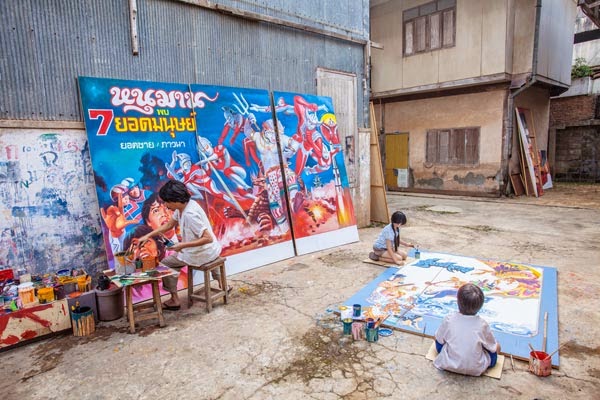
Showing posts with label Payut Ngaokrachang. Show all posts

Tuesday, August 25, 2015

Thai Short 19: Winners, R.D. Pestonji and Payut Ngaokrachang reviews


Deeply personal relationships were a common thread running through many of the prize-winning entries in the 19th Thai Short Film and Video Festival, which wrapped up on Sunday at the Bangkok Art and Culture Centre.

The festival’s top prize for general filmmakers, the R.D. Pestonji Award, went to After Image by Patana Chirawong. Full of warmth and humour, After Image was about an elderly gay man contacting his university crush, a straight guy who years ago had promised to take him on a date if he reached the age of 70. They meet in the forest, at an archaeology dig for dinosaur fossils. The promise of youth has faded away, and these old fellows are in touch with a past that is older than either can remember. A shadowy figure of a brontosaurus ambles by. Pretty nifty.

Runner-up winners were Neither Here Nor There by Skan Aryurapong, which was a succinct portrait of a wheelchair-bound man and his caretaker/lover, while the meta-heavy Motherland dealt with a young pregnant woman seeking advice from a co-worker at a factory.

And a special mention went to Hta Kwa’s Our Footprints, another prize-winning entry from the Chiang Mai NGO Friends Without Borders, which looks at the continuing struggles of Thailand’s indigenous people to continue their traditional ways of life in the forest. The disappearance of Karen activist Pholachi Billy Rakchongcharoen looms in the backdrop.

A scene from After Image, winner of the R.D. Pestonji Award.

Another major award winner was Dreamscape by Wattanapume Laisuwanchai. An entry in the Duke Award documentary competition, it won the Popular Vote from audience polling as well as the BACC Award.

Other notable finalists in the Pestonji competition included Our, a tender portrait of a young just-married couple taking their honeymoon by the beach. It's directed by Sivaroj Kongsakul of Eternity/Tee Rak fame, who has developed ninja skills in tugging heartstrings with his highly emotional shorts.

I also liked Spaghetti by Sittisak Kum-ai, which had a guy struggling to keep up a long-distance relationship with his girlfriend, who he hopes will return to him before the expiration date on a package of pasta he's tucked away in a cabinet.

There were chuckles for some other entries, such as Jakkrapan Srivichai's Horror Radio, in which a security guard who listens to spooky radio serials calls into the station one night with his own story. Symmetry by Ukrit Malai had an older fellow reflecting on a different, parallel life of a brother (or was it his son?), which sees living-room recliners and a Playstation (also a ping-pong table) transported magically from a house to an open field. And there was good fun to be had in Director and Actor, directed by and starring Weera Rukbankeru, which had him struggling to direct himself in various scenes.

And the festival wouldn't be complete without at least one mysterious jungle thriller. Perennial festival entrant Pramote Sangsorn headed into the woods for Sudd Song Nor, which had a reporter camping out with a big-game hunter in search of the last rhino. Homoerotic tendencies surface in a discussion about taking the rhino's horn, but leaving the unseen beast alive. Later on, both men cover themselves from head to toe with mud.

Prince Johnny, winner of the Payut Ngaokrachang Award.

I really connected with the block of animated entries in the Payut Ngaokrachang Award competition, which is named for Thailand's pioneering maker of animated shorts and features. The audience was sparse for the Sunday morning show, but included a cool farang dad who brought his two small children. Still, I heard gasping from the kids when the cartoons took dark turns, which were frequent.

The top prize Winner Prince Johnny by Patradol Kitcharoen was wonderfully morbid with its story of a fairy-tale prince trying to revive the corpse of a long-dead princess locked in a tower. Bleaker still was a runner-up winner Sound of the Silence by Akapop Khansorn, which deals with an imprisoned woman.

There was conflict aplenty in Stained White by Thanchanok Phruetkittiwong, Vichuda Surattichaikul and Supisara Songpirote, in which Red City kids and Green City kids just want to play together but instead have to fight. There was also the special mention winner Black-White by Jaturon Jetwiriyanon, which had Germanic-looking chess pieces in an endless war – no worries about Nazi imagery here, it's used to show the horror of war and isn't glorified as it has been in cases that crop up from time to time in news about Thailand.

Simply entertaining entries included the special mention winners Breaking Zoo by Prakasit Nuansri (about an escaped overheated gorilla); Lamp by Narueporn Winiyakul (about a fishing cat making friends with cute anglerfish) and the fun football-themed Kickoff by Twatpong Tangsajjapoj.

Luukmaai, a finalist entry in the Payut Ngaokrachang competition.

I'm surprised Luukmaai by Rachaneekorn Uthaithammarat didn't win a prize. The story of a forest-dwelling man who befriends a tree spirit, the character design really reminded me of Payut's work in The Adventure of Sudsakorn, which to me is remarkable, because not many Thai animators actually seem to be influenced by Payut, who had his own style, but could be compared to Tex Avery or maybe Disney.

These days, most Thai animation takes Japanese anime as its cue, not that there's anything wrong with that. The anime style was especially evident in the crazily sick Gokicha Love Story by Chidchanok Saengkawin, which had a cockroach who thinks she's a princess trying to woo a guy, but the guy is horrified because he only sees her as an insect. Festival Rush by Chawanat Rattanaprakarn also looked like anime, but told a distinctively Thai story, with a boy at a temple fair chasing down masked criminals who stole the doll he won for his sweetheart.

And 3D computer graphic animation continues to progress. Aside from the award-winners like Black-White and Breaking Zoo, memorable entries included the heist comedy The Sneaker by Chattida Ajjimakul, and the nature-themed To the Light by Jane Horsakul.

Worth noting is this year's festival title, a "bumper" that is created new each year by various notable filmmakers. This year, it was the turn of Chulayarnon Siriphol, a perennial award-winner in past years, whose entries are thought-provoking, satiric and, most importantly to me, entertaining. Chualyarnon actually did two titles. One had images of soldier statues and people offering prayers to a shrine, and an auditorium with an empty movie screen. I won't comment further on what I think it means. Chulayarnon also did a stop-motion thing involving birthday candles with nails stuck in them so they resembled insects, crawling over someone's skin. Of course, both festival titles had images of eggs, which is part of the iconography of the Thai Short Film and Video Festival.

New to the festival this year is an additional cash prize, free equipment rental and use of a production crew to the top-prize winner of the R.D. Pestonji Award from VS Service, a company that has long been involved with providing services to foreign movie productions. Established in 1985 with a single generator to hire out, among VS Service’s early clients was Santa Film, a production services firm run by a son of Pestonji, who is regarded as Thailand’s first auteur filmmaker. The award is especially symbolic for the head of VS Service, cinematographer Pithai "Pete" Smithsuth, who has now taken over the company his father started.
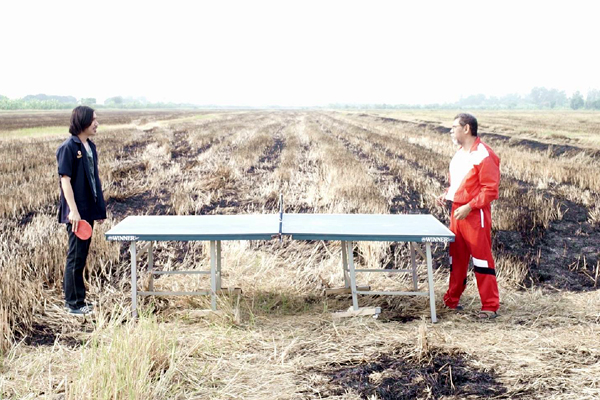
Symmetry, a finalist entry in the R.D. Pestonji competition.

Anyway, here are the winners in the 19th Thai Short Film and Video Festival:

Popular Vote

  • Dreamscape by Wattanapume Laisuwanchai


International Competition

  • Best Short Film: Rene R Letters by Lisa Reboulleau (France)
  • Special Mention: Fallen Leaves by Masha Kondakova (Ukraine) and Moving in Circles by Maxim Dashkin (Russia)


R.D. Pestonji Award

  • Winner: After Image by Patana Chirawong
  • Runner-up: Motherland by Varinda Naronggrittikun; Neither Here Nor There by Skan Aryurapong
  • Special Mention: Our Footprints by Hta Kwa


White Elephant Award (undergraduate students)

  • Winner: Rose Moon and the Missing Sun by Tulyawat Sajjatheerakul
  • Runner-up: The Country Boys by Krailas Phondongnok; Temperature of Roomtone by Pamornporn Tandiew
  • Special Mention: Glowstick by Pahphawee Jinnasith; Once Upon a Time by Jantraya Suriyong and Siripassorn Umnuaysombat; Oun Kwa Nhee Kor Phee Leaw by Yanisa Pornawalai


Special White Elephant (youth films)

  • Winner: Last Summer by Dapho Moradokpana
  • Runner-up: What a Wonderful World by Jirapat Thaweechuen, Thanawat Noomcharoen and Pu-ton Thongtan
  • Special mention: Untitled by Rachapol Sangsri and Tanyawat Sajjateerakul


Payut Ngaokrachang Award (animation)

  • Winner: Prince Johnny by Patradol Kitcharoen
  • Runner-Up: Fragile by Pennapa Chanwerawong; Stained White by Thanchanok Phruetkittiwong, Vichuda Surattichaikul and Supisara Songpirote; Sound of the Silence by Akapop Khansorn
  • Special Mention: Breaking Zoo by Prakasit Nuansri; Lamp by Narueporn Winiyakul; Black-White by Jaturon Jetwiriyanon and Kickoff by Twatpong Tangsajjapoj


Duke Award (documentary)

  • Winner: Sinmalin by Chaweng Chaiyawan
  • Runner-up: Michael’s by Kunnawut Boonreak; The Spirit of the Age by Wichanon Somumjarn
  • Special Mention: Chumchon Khon Khaya by Thitipat Rotchanakorn and Pawee Melanon; Pak Bara by Apichon Rattanapayon and Watcharee Rattanakree


Cinetoys Best Cinematography Award

  • Last Scene by Rajchapruek Tiyajamorn


Vichitmatra Award

  • My Grandfather’s Photobook by Nutthapon Rakkhatham and Phatthana Paiboon
  • Fon by Aekaphong Saranset
  • If You’re a Bird, I’ll Be Your Sky by Visuta Matanom
  • Yhahok by Nathan Homsup


BACC Award

  • Once Upon a Time by Jantraya Suriyong and Siripassorn Umnuaysombat
  • Dreamscape by Wattanapume Laisuwanchai


Pirabkhao Award

  • Sinmalin by Chaweng Chaiyawan


Best Actor

  • Arachaporn Pokinpakorn from Glowstick


(Adapted from an article in The Nation)

Sunday, September 14, 2014

Review: Tukkae Rak Pang Mak (Chiang Khan Story)


  • Directed by Yuthlert Sippapak
  • Starring Jirayu La-ongmanee, Chonthida Asavahame
  • Released in Thai cinemas on August 28, 2014; rated 15+
  • Wise Kwai's rating: 3/5

Yuthlert Sippapak pays homage to his roots with the partly autobiographical romantic comedy Tukkae Rak Pang Mak (ตุ๊กแกรักแป้งมาก, a.k.a. Chiang Khan Story.

Spanning 20 years from the 1970s to the '90s in the Mekong River town of Chiang Khan in Yuthlert's home province of Loei, it's the story of childhood friends, the poor little orphan boy with the odd name of Tukkae (after the large chirping house lizard that's believed be a bad omen) and the wealthy girl Pang. They later grow apart, but are forced back together by circumstances that only happen in romantic comedies.

The first half of the movie, featuring a cast of child actors, is energetic, sweet and nostalgic, weaving in memories of 4-baht wooden cap guns with the rubber-band action, the then-newfangled foreign treat of jellybeans and GAF Viewmasters.

Tukkae and Pang take to hanging around the town's wooden shophouse cinema. It's during a magical time when such Thai cinema classics as Sombat Metanee's gritty actioner Chumpae is playing alongside Payut Ngaokrachang's animated triumph The Adventures of Sudsakorn and Sompote Sands' insane Hanuman vs. 7 Ultraman.

The kids are mentored by the theater's poster painter, played by Yuthlert's longtime collaborator "Uncle" Adirek Watleela. His character Pong Poster is a heartfelt tribute to still-living 1970s' director Piak Poster, who started out as a poster artist, as well as Uncle's late Buppa Rahtree co-star, character actor and production designer Bunthin Thuaykaew.


Tukkae, always on the defensive because of his funny nickname and his status as a poor orphan kid, seeks to play with the gang of chubby boys who always bully him. In lively action scenes, they blast away with their cap guns while wearing Red Eagle masks, like Mitr Chaibancha. And Tukkae accepts a dare that drives Pang out of his life, seemingly forever.

Flash forward a few years to Bangkok, Tukkae is a comic-book artist with aspirations of getting in the movie business. He's partnered up with a level-headed and experienced film hand, amiably played by Slice director Kongkiat Khomsiri, one of several film industry hands in the cast. In another scene, Thanit Jitnukul (Bang Rajan) turns up as a producer. He can't believe Tukkae doesn't know what a "treatment" is.

The guys are tasked with making a Mae Nak "liverscape" movie by a hilariously marble-mouthed B-movie producer who sees nothing wrong with moving the famous ghost story from Phra Khanong to Chiang Khan. Tukkae has other ideas, and he writes an "untitled" screenplay that is basically his life story, with a focus on his relationship with Pang.


The implausibilities stack up as Tukkae encounters Pang by chance in a Bangkok disco, and she doesn't remember him at all. In fact, nobody from Tukkae's old school remembers what anybody looks like. But this is, refreshingly, before Facebook and selfies, so I suppose the disbelief can be suspended somewhat. Mistaken identities and misunderstandings add to Tukkae's woes as Pang wakes up in Tukkae's bedroom and doesn't recognize Tukkae or any of his stuff (not even the Viewmaster she gave him).

But the two are thrown together anyway when Pang, now a famous actress, is cast for the role in Tukkae's movie. Awkwardness ensues on the set as Pang is confronted with the guy she only recognizes from that bad night out. She doesn't realize it's her old childhood friend, nor does she seem aware that he actually wrote the screenplay for the movie she's in.

The energy and sweetness of the movie's first half gives way to a wallowing slackness that's struggling to find an ending. It's not helped by the rather wooden performances by Kao Jirayu and Pleng Chontida. Kao, a former child actor with many credits, has better chemistry in later scenes with his character's dementia-addled grandmother who raised him. Pleng, the celebrity offspring of singer Nantida Kaewbuasai and scandal-plagued politician Chonsawat Asavahame, is making her screen debut, but seems to let a curly hairstyle and aviator sunglasses do all the work for her.


The supporting cast, especially the Tukky-type actress who plays Pang's best friend and manager, help to liven things up. She is friends with soldiers at the local army base, and they turn up on command to dish out beatings to anyone getting on her wrong side. Boriboon Chanruang portrays a director who spent so long in New York he's forgotten to speak Thai. He becomes Tukkae's chief rival in romancing Pang.

Yuthlert seems to have suppressed his infamous genre-jumping tendencies in an effort to make what he's called his first romantic comedy, though melodrama, horror and slapstick all creep their way in, just not as much or as often as his past films.

Tukkae Rak Pang Mak also marks a comeback of sorts for Yuthlert, who has done more than a dozen films over around half as many years up until a year or so ago. However, his last effort, the potentially controversial Deep South drama Fatherland (ปิตุภูมิ พรมแดนแห่งรัก, Pitupoom) was yanked from release by the film's producer. So Yuthlert retreated to Loei to regroup.

His new film is the first release from a new studio, Transformation Films, which is a joint venture of M Pictures, Bangkok Film Studio (formerly Film Bangkok), True I-Content and Matching Studio.

Box-office performance for Tukkae has been middling, with 12.7 million baht in earnings at last count, but hopefully the company will soldier on and perhaps give one of Thai cinema's most distinctive voices yet another chance to tell his stories.

See also:


Tuesday, June 3, 2014

Thai Film Archive treasures unearthed on YouTube


Every day, for the past year or so, the Thai Film Archive has been uploading clips to its official channel on YouTube, sharing a wealth of public-domain footage, this-day-in-history newsreels, documentaries and other historical film artifacts.

The effort is a fantastic public service, and makes the archive's holdings available to everyone, or at least those who have an Internet connection.

However, it's not very English-friendly – the Thai Film Archive, after all, exists to serve the Thai people first. So for those who don't understand Thai, keeping track of the significance of the uploads can be a daunting task.

Thankfully, The Nation has an article that points to a few of the highlights.

Among them is the first Thai feature film, 1927's Chok Song Chun (โชคสองชั้น, Double Luck). A 2012 entry in the Films as National Heritage Registry, just 55 seconds is what remains of the movie, mostly consisting of a fight scene and a car chase. It was made by the Wasuwat Brothers' Sri Krung Studio, which was Thailand's first major movie studio. Today, the studio's bright yellow building has been replicated on the grounds of the Thai Film Archive in Salaya, and it houses the Thai Film Museum and serves as one of the archive's icons.

Most significant is another 2012 entry in the film registry, the first Thai animated film, Payut Ngaokrachang's Hed Mahassajan (เหตุมหัศจรรย์ , The Miraculous Incident) from 1955. In the seven-minute short, Payut cheekily inserts himself into the action as he witnesses the events leading up to a traffic pileup in Bangkok. Payut has been called "the Walt Disney of Thailand", but the film reminds me more of Tex Avery.

Do not adjust your settings – there is no audio with the clip. It was made during the heyday of live dubbing, in which a troupes of voiceover artists would accompany films and provide all the dialogue and sound effects during the screenings. And now that Hed Mahassajan is on YouTube, it's ripe for remix treatments. Perhaps budding filmmakers, animators, composers and sound-effects artists might try their hand at adding soundtracks of their own.

And one more gem to feast your eyes on, and listen to, The Diamond Finger – an eye-poppingly gorgeous staging of a classical Thai dance episode from the Ramakien, the Thai version of the Ramayana. From 1958, the 27-minute film is directed by pioneering auteur Ratana Pestonji and is staged by the Fine Arts Department, with narration by Thai statesman MR Kukrit Pramoj.

Out of respect to the Archive and the care it has taken, I won't embed the videos here, so head on over to the YouTube channel and start watching.

Friday, October 5, 2012

25 more films picked for Thai historical registry

A still from Chok Song Chan (Double Luck). Only about one minute of the 1927 film survives.

King Rama VIII's arrival in Bangkok, a fragment of a 1927 silent and aerial footage of Bangkok being bombed during World War II are among the additions this year to the Thai Culture Ministry's Registry of Films as National Heritage.

The listing by the Culture Ministry and the Thai Film Archive coincides with Thai Film Conservation Day. The registry was initiated last year with 25 entries, and this year's list has 25 more historic films.

From 1938, King Rama VIII's Arrival in Thailand is "rare and precious" footage, archive director Dome Sukwong was quoted as saying by The Nation today. The newsreel chronicles the arrival of 13-year-old King Ananda Mahidol and members of his family, including his younger brother, the present king, the Princess Mother and sister Princess Galyani Vadhana. Picked as king when he was 9 years old, the boy monarch was born in Germany and raised overseas. He was chosen king after the abdication of King Rama VII, following a coup that established the constitutional monarchy.

The earliest entry on this year's list is 1927's Chok Song Chan (โชคสองชั้น, Double Luck), the first film produced by a Thai company, the Sri Krung studio. Before then, there was the Hollywood co-production Miss Suwanna of Siam, which has been lost. King Kong director Merian Cooper's jungle adventure Chang was made around the same time. But Double Luck is considered the first actual Thai feature film. Unfortunately, all that remains is about 82 feet – around 1 minute – of a car chase.

The World War II footage was shot aboard a B-29 bomber on December 14, 1944. Thailand, having been occupied by Japan, actually issued a declaration of war against the Allied powers. Another news clip from the World War II era is a parade of soldiers fighting for the Seri Thai or Free Thai movement, which was opposed to the Japanese occupation and the totalitarian Thai government of the time.

An interesting artifact is 1967's Gnathostoma Spinigerum and Gnathostomiasis in Thailand, a short film made by a Thai physician to present his findings about roundworms and the illness caused by them.

Another historic reel is the first Thai animated film, 1955's Hed Mahassajan (The Miraculous Incident), by the "Walt Disney of Thailand", Payut Ngaokrachang. The short depicts a humorous city outing by a gentleman – Payut himself – and culminates in a traffic pileup caused by a policeman being distracted by a popped button on an attractive lady's outfit.

Feature films on the list include the 1958 musical drama Dark Heaven, the first color film by pioneering auteur RD Pestonji. There's also 1959's Mae Nak Phra Khanong, the first of many adaptations of the famous legend of the ghost wife.

The romantic drama Reun Pae (The Houseboat) from 1961 is another enduring classic. Even today, youngsters can hum along to the theme song. Historic for a number of reasons, it was a Hong Kong co-production and was shot on 35mm with sound, rare for the era when post-dubbed 16mm films were still prevalent. It was chosen for restoration through a grant by Technicolor and the Thomson Foundation a few years ago.

Iconic screen couple Mitr Chaibancha and Petchara Chaowarat star in the 1965 entry, the sprawling musical comedy Ngern Ngern Ngern (Money, Money, Money) and 1970's action drama Insee Tong (Golden Eagle), which Mitr died making, being killed in a fall from a helicopter while filming the last scene. Petchara's first film, 1961's The Love Diary of Pimchawee, is also on the list.

Even the costumed B-movie antics of notorious cult director Sompote Sands are honored in this year's list, with Hanuman vs Seven Superheroes from 1974 making the cut. It has footage of Thai mythological characters intercut with footage from a Japanese Ultraman movie.

There are also examples of "social problem" movies, with Kru Bannok (The Country Teacher) from 1978 and MC Chatrichalerm Yukol's taxi-driver drama The Citizen starring Sorapong Chatree from 1977. Another social-realism stalwart, Vichit Kounavudhi, is represented with his early effort, 1961's Hands of a Thief.

Newer notable films are also included, such as 1999's gritty urban homelessness drama Kon Jorn. The most recent entry on the list being Uruphon Raksasad's award-winning farmer drama Sawan Ban Na (Agrarian Utopia) from 2009.

Registry of Films as National Heritage, 2012

  1. Chok Song Chan (เรื่องโชคสองชั้น , Double Luck), 1927
  2. Cheewit Kon 2475 (ชีวิตก่อน 2475, Life Before 1932, 1930
  3. Hae Rattathamanoon (แห่รัฐธรรมนูญ , National Constitution Parade, 1933
  4. King Rama VIII's Arrival in Thailand, 1938
  5. The bombing of Bangkok, 1944
  6. Seri Thai March, 1945
  7. Hed Mahassajan (เหตุมหัศจรรย์ , The Miraculous Incident), 1955
  8. Sawan Meud (สวรรค์มืด , Dark Heaven), 1958
  9. Mae Nak Phra Khanong (แม่นาคพระโขนง), 1959
  10. World Boxing Championship, match between Hua Hin native Pon Kingphetch and Argentina's Pascal Peres, Bangkok, 1960
  11. Meu Jon (มือโจร, Hands of a Thief), 1961
  12. Reun Phae (เรือนแพ , The House Boat), 1961
  13. Bunteuk Rak Khong Pimchawee (บันทึกรักของพิมพ์ฉวี, The Love Diary of Pimchawee), 1962
  14. Ngern Ngern Ngern (เงิน เงิน เงิน, Money, Money, Money), 1965
  15. Saneh Bangkok (เสน่ห์บางกอก , Charming Bangkok), 1966
  16. Gnathostoma Spinigerum and Gnathostomiasis in Thailand, 1967
  17. A Drug Inmate's Execution by Firing Squad, 1967
  18. Insee Thong (อินทรีทอง, Golden Eagle), 1970
  19. The Dalai Lama Visits Suan Mokkh, 1972
  20. Hanuman Pob 7 Yod Manut (หนุมานพบ 7 ยอดมนุษย์ , Hanuman vs the Seven Superheroes, 1974
  21. Thongpoon Khokpho Rassadon Temkhan (ทองพูน โคกโพ ราษฎรเต็มขั้น, The Citizen), 1977
  22. Kru Bannok (ครูบ้านนอก, The Country Teacher), 1978
  23. Muang Nai Mhok (เมืองในหมอก , City in the Mist), 1978
  24. Kon Jorn (คนจร ฯลฯ ), 1999
  25. Sawan Ban Na (สวรรค์บ้านนา, Agrarian Utopia), 2009

Kong Rithdee further details the list in his article today in the Bangkok Post.

Monday, September 6, 2010

14th Thai Short Film & Video Festival: The winners


The 14th Thai Short Film & Video Festival closed on Sunday night with a lively awards ceremony in a packed auditorium at the Bangkok Art and Culture Center.

Special tribute was paid to animator Payut Ngaokrachang, who died in May at age 81. Video footage of the spirited Payut was an interview conducted by historian and Thai Film Archive director Dome Sukwong as well as yellowed reels of the artist and animator working in his studio back in the 1950s. The festival's animation award is named after the creator of Thailand's first animated feature, The Adventure of Sudsakorn, and Payut personally attended the festival each year to present the medallion that he designed to the winner.

A focal point of the ceremony is a large white candle. Everyone is asked to stand when it is lit at the beginning of the ceremony. "It's our tradition to pay respect and memorialize the inspirations for the awards, such as R.D. Pestonji, Pridi Banomyong, etc.," says festival program Sanchai Cotirosseranee.

The winner of the festival's R.D. Pestonji Award – named after the pioneering, influential filmmaker of the 1950s and '60s – was Nawapol Thamrongrattanarit for Cherie is Korean-Thai (เชอรี่เป็นลูกครึ่งเกาหลี), a comical social-message film about an absurd actress interviewing female construction day-laborers as research for a role she'll be playing in a soap opera.

Fabricative (ตั้งแต่เกิด), a 15-minute film involving mannequins, won the White Elephant Award for undergraduate college students. It's directed by Panapan Tangsomboon at King Mongkut's University of Technology Thonburi. The award is named for King of the White Elephant, the 1941 film made by Thammasat University students and faculty and produced by statesman Pridi Banomyong.

The Special White Elephant Award, awarded to students under age 18 went to the 16-minute thriller Damned Life of Yoi (ตัวเ-ี้ย ฝันร้าย และด.ช.หยอย) by Teerath Wangwisarn, who also won the runner-up prize for Men & Women.

A highlight of the ceremony was the third consecutive year of recognition for for 10-year-old filmmaker Phumrapee Sae-tang for his thriller Dream. Two years ago, the pint-sized filmmaker was awarded a special jury prize – a small-sized White Elephant trophy – for his Would You Like to Buy Voice?, and was awarded a special mention last year for Do It By Myself.

Jurors presenting the awards included October Sonata director Somkiet Vituranich and Nak Prok actress Inthira Charoenpura for the R.D. Pestonji Award, Dear Dakanda director Komkrit Treewimol for the White Elephant Award, Unreal Forest director Jakrawal Nilthamrong for the Duke Award for documentaries and Wai Ounlawon 4 director Ruethaiwan Wongsirasawasdi and Singaporean film expert Philip Cheah for the international competition. Indie filmmaker Tanwarin Sukhapisit, maker of this year's "egg" introduction reel that was played before each program, presented the best actor award.

Here's the list of awards:

R.D. Pestonji Award (best short film from general individuals)

  • Winner: Cherie is Korean-Thai by Nawapol Thamrongrattanarit
  • Runner-up: Own by Wiwat Lertwiwatwongsa
  • Runner-up: In Space by Visra Vichit-Vadakan
  • Special mention: Where Can I Find Seripap? by Pass Patthanakumjon

R.D. Pestonji Award International Competition

  • Winner: Vilay by Umesh Kulkarni (India)
  • Special mention: Leerfahrt by Matis Burkhardt (Germany)
  • Special mention: Below the Blue (Tiefensucht) by Florian Fessl (Austria)

White Elephant Award (best short by undergraduate student)

  • Winner: Fabricative by Panapan Tangsomboon
  • Runner-up: On the Road by Thepmanee Kittithawornkul
  • Runner-up: The Circle by Alongkot Duangraksa
  • Special mention: Grocery, My Love by Meathus Sirinawin
  • Special mention: Nice to Meet You by Jakkarin Thepvong
  • Special mention: It's Hard to Say How I Love You, Captain Hook by Napat Treepalawisetkun

Special White Elephant (best short from students 18 years old and younger)

  • Winner: Damned Life of Yoi by Teerath Wangwisarn
  • Runner-up: Men & Women by Teerath Wangwisarn
  • Runner-up: Sweet Monologue by Kawitsara Phannapanukul
  • Special mention: Running by Nipaporn Khansingh and Pimpetch Pimthon
  • Special mention: Dream by Phumrapee Sae-tang
  • Special mention: Repeat Occurrence by Veerayoot Gajangsri and Napat Tangsanga

Duke Award (best documentary, named after Prince Sanbassatra, the "Father of Thai Film")

  • Winner: Remembrance by Sittiporn Racha
  • Runner-up: Shades of Shadow: Saga from the Jungle, Stranger at Khun Yuam by Suporn Shoosongdej
  • Runner-up: Somwang 2553 by Norachai Kajchapanont
  • Special Mention: Dear Brothers & Sisters by Reality Filmmaker

Payut Ngaokrachan Award (best animation)

  • Winner: Aspiration by Chakraphun Suebsan
  • Runner-up: The Parallel Age by Thapat Kijrujipark
  • Runner-up: (An)other) by Apasri Titatarn
  • Special mention: Online by Sippanon Rodkumtuy
  • Special mention: Behind the Seawall by Pattaraporn Werasakwong
  • Special mention: Hypnotize by Nathawut Praphong

Vichitmatra Award (for "distinctive achievements in filmmaking")

  • Grocery, My Love by Meathus Sirinawin
  • Filmnimatique by Nuttanai Lertpreechapakdee
  • Winter Reminiscene by Thanatphan Palakawong na Ayutthaya
  • Behind the Wall by Pattaraporn Werasakwong

Pirabkhao Award (for best social-message film)

  • Pre-Attitude by Panu Saeng-Xuto

Best Actor

  • Suphatra Treepalawisetkun in It's Hard to Say How I Love You, Captain Hook

Kodak Film School Competition (for the best cinematography shot on Kodak Film)

  • Butterfly Wheel by Tanika Janejessda

Popular Vote (results of audience ballots)

  • Online by Sippanon Rodkumtuy

Tuesday, August 24, 2010

6th Singapore Short Film Fest has The Wind and a ton of other Thai shorts


Last year I attended the Singapore Short Film Festival for the first time, and was looking forward to going back this year. However, I think because of the red-shirt protests, this year's Thai Short Film & Video Festival is delayed slightly, and so the two largely complementary events are being held at the same time.

So I'll be heading to the Bangkok Art and Culture Center while at The Substation on Singapore's Armenian Street, the sixth Singapore Short Film Festival opens with Horizons, films transcending the usual borders of space, nature and time. The package includes the world premiere of The Wind (Ror Lom) by Tulapop Saenjaroen, a young filmmaker who's part of Anocha Suwichakornpong's Electric Eel crew.

In fact, there's another Electric Eel production in the fest: the award-winning Four Boys, White Whisky and Grilled Mouse showing as part of the S-Express Thailand program curated by the Thai Film Foundation's Sanchai Cotirosseranee.

Other S-Express Thailand selections are Prisoner by Prachaya Lampongchat; last year's top Payut Ngaokrachang Medal winner at the 13th Thai Short Film & Video Festival Sink [Vi] by Pittaya Werasakwong; Censored by Kong Pahurak (The Wasesda University student's latest film, Ladybird’s Tears premiered at this year's Singapore International Film Festival, with help from Edmund Yeo); Nirvana by Siwadol Rathee, which looks at the prohibition of disabled people from Buddhist ordination and Karaoke: Think Kindly by Scene 22, on whether reconciliation can solve the Thai conflict.

Anocha's Old Heart is part of the Diary program, along with Motionless City by Wassachol Sirichanthanun, Tulapop's The Return and A Tale of Heaven: Cinema Forest by Phuttiphong Aroonpheng, which previously screened at this year's International Short Film Festival Hamburg.

Whimsical Fancies has Fairy Feminine by Arpapun Plungsirisoontorn.

The Kids Aren’t Alright, films that speak of the psyche behind children, adolescents and youths of today, has Nottapon Boonprakob's troubled-boy story Drown, which was shown at the recent Bangkok IndieFest. It's previously been shown at the K3: International Short Film Festival in Austria at this year's Bueu International Short Film Festival in Spain.

Foreign Lands has Phuket by Aditya Assarat, which opens this year's 14th Thai Short Film & Video Festival and will be screened in a limited theatrical run in Bangkok as part of the Director's Screen Project.

An animation package has The Value of Tree by Salisa Piencharoen, which won a special mention Payut Ngaokrachang Award at last year's Thai Short Film & Video Festival. Mokhaphon Sanghirun has Destination, which also won a special mention Payut Ngakrachang Award at last year's Thai shorts fest.

There's also the S-Express packages from Singapore, Indonesia, Malaysia, Chinese and the Philippines, which are also part of the 14th Thai Short Film & Video Festival. The Philippines package is curated by Francis "Oggs" Cruz, Dodo Dayao, Richard Bolisay, who pay tribute to the late Alexis Tioseco, previous S-Express Philippines curator, and his partner Nika Bohinc, who died last year.

The sixth Singapore Short Film Festival runs from August 28 to September 5.

Monday, August 23, 2010

14th Thai Short Film & Video Festival sets schedule, Alexis-Nika memorial tribute and Unreal Forest

The schedule for the 14th Thai Short Film & Video Festival is done. There's even a spreadsheet, which will come in handy because there will be movies showing on two screens, in the fifth floor auditorium of the Bangkok Art and Culture Center and in the fourth-floor conference room. In past years, the screenings have been confined to one room.

The programmers give us a lot to look forward to and think about.

Among the special programs this year will be an Alexis Tioseco and Nika Bohinc Memorial Screening, in honor of the film-expert couple who were killed in their home by gunmen on September 1 of last year.

Filmmaker Kidlat Tahamik offers his Each Film ... An Island?, an unfinished new feature. Kidlat explains:


Each Film ... An Island? ... an isolated mass of sedimented sights/sounds?

A cineaste’s filmography ... an archipelago of edited films ... Can island explorers decipher the auteur’s DNA from the celluloid bedrock?

In 2004 my house burned with all the VHS masters of my Video8 shorts. I was resigned – impermanence is a fact of life. How many more islands will submerge with the global warming.

On 2008 on the wild impulse, I e-mailed the Tokyo Video Festival: Were winning award videos archived? Hooray! Even non-winning entries by my son were digitized since 1989(our analog decade)!

My fossilized videos-an uncharted atoll of my filmless films. Let’s go island-hoping! Let’s see of re-incarnated analog Hi-8 images merged with HD open up a whole new road-film diary.

(Director's statement, YIDFF)

Please feel free to screen my unfinished film. Anyway all my films are unfinished is a way – because they might still be included in a future film. It is a compilation of excerpts for my past films and videos. So it is like a short film festival in itself.

I hope this version of the film will be a proper tribute to Alexis if you believe so. I am honored.

That's in addition to the S-Express Philippines program, which Alexis curated up through last year. This year, in tribute to Alexis, Francis "Oggs" Cruz, Dodo Dayao and Richard Bolisay have put together a program of shorts "that represent what the Philippines, as a country that is diverse and multi-faceted, truly is."

There's also S-Express programs from Singapore, Malaysia, Indonesia and "Chinese".

Many other special programs have been detailed earlier. These include the Best of Clermont-Ferrand, from the world's biggest short film festival.

The musical documentary Baby Arabia makes its world premiere on September 1, likely with a mini-concert by the band. Baby Arabia is also tipped for the selection at this year's Vancouver International Film Festival.

There's the Animation Showcase in Tribute to Payut Ngaokrachang, the pioneering Thai animator who died in May. The progam features animated shorts from Japan, the U.K., Norway, Ireland and Spain and is highlighted by Payut's 20-minute short, A New Adventure of Hanuman (หนุมานเผชิญภัย (ครั้งใหม่)). From 1957, it's an anti-communist propaganda film Payut did while working for the U.S. Information Service, which has Hanuman the white monkey god fighting the Red menace.

Queer of Siam features a selection of Thai shorts, Coming of AIDS by Waasuthep Ketpetch, Ter Lae Ter (เธอและเธอ) by Sutthion na Lumphoun, Pre-Attitude by Panu Saeng-Xuto and Play Name by David Snyder. Program Queer: Generation offers an international selection of shorts from Belgium, Argentina, Brazil and Norway.

Another special program, In the Realm of Conflict is in observance of Bangkok's politically charged violence of just a few months ago, and has shorts about all sorts of conflicts from Georgia, Palestine, Iraq, Finland, Norway, the Netherlands, South Korea and Indonesia.

Beyond Yangon is a package of short documentaries that offer a rare glimpse inside the borders of military-ruled Myanmar from the Yangon Film School, a non-profit organization founded in 2005 by Anglo-Burmese filmmaker Lindsey
Merrison.

Also special this year is Pridi 110, a selection of six short documentaries on statesman Pridi Banomyong in observance of his 110th birth anniversary.

There's even Shorts for Kids.

Of course, the Thai Short Film & Video Festival isn't all about shorts, and so the Digital Forum program returns this year with feature-length works.

Among them will be the Thailand premiere of Unreal Forest, Jakrawal Nilthamrong's experimental documentary made as part of the International Film Festival Rotterdam's Forget Africa program. It previously played in Singapore and Milan. The screening coincides with a multi-platform art exhibition of Unreal Forest, set for the Numthong Gallery.

But the whole raison d'être of the Thai Short Film & Video Fest is the competitions, and the finalists have been chosen, with categories for student films (White Elephant for college students and Special White Elephant for younger pupils), the general public (the RD Pestoni Award), animation (the Payut Ngaokrachang Medal), documentaries (the Duke Award) and the International Competition.

The festival opens at 5 on Thursday with registration and then the first program at 6, with the premiere of Aditya Assarat's Phuket (set to screen in Bangkok later as part of the Director's Screen Project), the Georgian conflict film Aprilis Suskhi by Tornike Bziava and the Oscar-winning short Logorama from France.

Wednesday, August 4, 2010

14th Thai Short Film & Video Festival August 26 to September 5

The 14th Thai Short Film & Video Festival, organized by the Thai Film Foundation with support from Office of Contemporary Art and Culture and Ministry of Culture, is set for August 26 to September 5.

Apart from the local and international competition, selected from more than 700 entries, the festival is full of the special programs that have become popular in recent years.

Back this year will be selections from the Clermont Ferrand Short Film Festival, the biggest short film festival in this world, the Queer Program and the S-Express collections of shorts from Southeast Asia, China and Taiwan.

Programs just for this year include a selection of short documentaries to commemorate 110th birth anniversary of statesman Pridi Banomyong and an animation showcase in tribute to Sudsakorn animator Payut Ngaokrachan (the "Walt Disney of Thailand"), who died this past May 27.

In observance of Thailand's political turmoil, the festival will exhibit shorts from around the world focusing on the life and relationship after conflict.

There will also be the premiere of Baby Arabia, a musical documentary on a Thai-Malay band from the makers of The Convert, Panu Aree, Kaweenipon Ketprasit and Kong Rithdee

The festival venue will again be the Bangkok Art and Culture Center at the Pathumwan junction, opposite of MBK. Admission is free of charge. And English subtitle is available only for some films.

More special programs and tributes are in the works, and the selection of competition finalists will be released about mid-August.

(Via Thai Film Foundation)

Friday, July 9, 2010

Sudsakorn screening every Sunday morning at Film Archive

In memory of the late Thai animator Payut Ngaokrachang, the Thai Film Archive in Salaya, Nakhon Pathom will screen his feature The Adventure of Sudsakorn (สุดสาคร) at 11am every Sunday from July 11 until October 3.

For now, it screens on Thai DVD only, with no English subtitles.

The story is based on an episode from Phra Aphai Mani, a 30,000-line epic poem by Sunthorn Phu, and depicts the fantastic adventures of the young son of a mermaid and a minstrel prince. The boy hero tames a dragon horse and encounters various characters in his travels.

Thailand's first animated feature, most of the intensely detailed work on it was done by Payut single-handedly, damaging his eyesight in the process.

It was his only feature film, and remains Thailand's sole cel-animated feature film.

Yet Payut's legacy is strong. The Ngaokrachang Prize for Animation at the annual Thai Short Film & Video Festival is a silver medallion designed by him, and dutifully presented to the winners up until last year.

Payut died on May 27 of this year at the age of 81.

For more details, call (02) 482 2013-14, ext 111.

Friday, May 28, 2010

In memoriam: Payut Ngaokrachang

Pioneering Thai animator Payut Ngaokrachang (ปยุต เงากระจ่าง), hailed as the "Walt Disney of Thailand", died yesterday. He was 81 years old.

Payut made the first Thai animated feature, The Adventure of Sudsakorn (สุดสาคร), which was released in 1979. The fantasy tale is adapted from Phra Aphai Mani, a 30,000-line epic poem by Sunthorn Phu (1786–1855).

Production of Sudsakorn took three years, with Payut doing much of the work himself and nearly going blind in the process. He related his struggles in an interview with Professor John A. Lent in 1997 at the Animation World Network:

I made a lot of my equipment from pieces I got from junk of World War II military surplus. I'd find a screw here, a crank there, etc. I used a combat camera and adapted it. I pulled together pieces of wood, aluminum, whatever I could find."

"I did all the key drawings myself, even the layout and design ... I was almost blind from doing that film and now I wear contacts. My right eye is long, my left is short, crooked because of all that detailed work."

According to Wikipedia, Payut was born on April 1, 1929 in Klong Warl village, Warkoe in Prachuap Khiri Khan Province. As a child, he was interested in nang yai (หนังใหญ่) shadow-puppet plays and Felix the Cat.

He studied art by corresponding with illustrator Hem Vejakorn, whose work was seen on the covers of 10-satang pulp novels.

The artist and self-trained animator started out making short films. His first was Haed Mahasajan (เหตุมหัศจรรย์) in 1955, about a distracted traffic cop and the resulting pile-up of cars.

The "Hollywood like" animation caught the attention of the United States Information Service, which put him to work making anti-communist propaganda posters. He made one short for USIS that had the Ramayana's white monkey god Hanuman battling a red communist monkey.

Payut collaborated with pioneering filmmaker Ratana Pestonji after Ratana had stopped making films in the mid-1960s and was making commercials for a living.

One of their works was an ad for a brand of patent medicine or whisky (not sure which) that was racy and politically incorrect by today's standards. Ratana actually made Payut a camera to use for the animation, and the equipment is on display at the Film Archive Museum in Nakhon Pathom.

With Japanese funding, he made an educational short for girls in 1992 called My Way.

Pressed to explain his influences – was his animation Japanese-style or American-style? – he said he had his own style, Payut style.

Payut never made another feature after Sudsakorn. The animation process was too labor-intensive and took too long; Thai studios preferred to make live-action films, quickly and inexpensively.

But Sudsakorn is a historic achievement. It's often screened at film festivals, though I have yet to actually see it.

I met Payut a couple of times, and though hard of hearing and unable to see clearly, he was still enthusiastic and sharp.

The first was in 2007 at the Thai Film Foundation's Cherd Songsri Retrospective. He appeared for the screening of Cherd's landmark drama Plao Kao (The Old Scar), which starred his daughter, actress Nantana Ngaograjang, as half of a star-crossed couple in a tragic romance.

He was at the Film Archive in 2008 to celebrate the 100th birth anniversary of Ratana Pestonji. There, he was showing off an elaborate art book, chronicling his works. That night, in the rain, he put his hand and footprints in the concrete outside the Archive's Sri Salaya Cinema.

Last year's inaugural Bangkok International Animation Film Festival paid tribute to him with a "Payut Night" and a gala screening of The Adventure of Sudsakorn.

Payut's name also touches new generations of Thai animators through the Payut Ngaokrachang Prize for animation given by the annual Thai Short Film & Video Festival. The award is a medallion, designed by Payut.

According to Matichon, bathing rites are set for 4pm on May 31 at Wat Chonprathan Rangsarit, Bang Talat, Pak Kret, Nonthaburi, where the cremation ceremony will be held on June 5 at 4.30.

(Via Veen_NT)

Saturday, February 27, 2010

14th Thai Short Film & Video Festival open for submissions

The 14th Thai Short Film & Video Festival is calling for submissions for the fest to be held in August. Shorts can be about anything, made in any style, but not longer than 30 minutes, except documentaries, and completed on or after January 1, 2009.

The fest has an international competition for non-Thais while Thai filmmakers compete for the R. D. Pestonji Award (general individuals), the White Elephant (college students), Special White Elephant (under 18), the Payute Ngaokrachang Award (animation) and the Duke Award (documentaries).

The deadline is May 31.

Send your DVD screeners to: 14th Thai Short Film & Video Festival, PO Box 6, Phuttamonthon, Nakhon Pathom, Thailand 73170.

Online entry forms can be filled out on the Thai Film Foundation website around the end of March.

(Via Matichon)

Saturday, December 26, 2009

Top 10 Thai films of the 2000s


Thai cinema in the first decade of the 21st century continued building on its resurgent commercial strength and the increased international recognition and critical acclaim that had begun in the late 1990s. For many movie buffs around the world, this was the decade they discovered Thai cinema. Here are 10 Thai films that were worth watching or were important in some way to the Thai film industry.

10. Shutter

Studio GMM Tai Hub (GTH) was built on the hit 2003 childhood drama Fan Chan, but its international reputation was cinched with this taut and spooky 2004 thriller about a photographer, played by Ananda Everingham, who starts seeing frightening images in his pictures. Directed by Banjong Pisanthanakun and Parkpoom Wongpoom, Shutter gave Thailand a place in the Asian horror pantheon alongside Japan, and just like Ju-on and Ringu, Shutter was remade by Hollywood – the first Thai movie to get that treatment.

9. Khan Kluay

Until 2006’s Khan Kluay – about King Naresuan the Great’s war elephant – the only Thai animated feature had been 1979’s The Adventure of Sudsakorn by Payut Ngaokrachang.
Khan Kluay, directed by Disney and Blue Sky Studios animator Kompin Kemgumnird, was not only the first Thai animated feature in more than 30 years, it was also Thailand’s first computer-animated feature. A sequel was released this year and improved on the techniques of the original. Khan Kluay II won an award at the recent Asia-Pacific Film Festival.

8. Love of Siam

Actually, two dramas were commercially released in 2007 by Sahamongkol Film International that treated gays as something other than the shrieking, mincing butt of jokes – Poj Arnon’s Bangkok Love Story and Chookiat Sakveerakul’s Rak Haeng Siam (Love of Siam).
But it was the family drama Love of Siam and its tender, sprawling story of teenage boys in puppy love that met with greater critical acclaim and became a worldwide cult favorite.

7. Yam Yasothon

Naysayers scoffed when comedian Phettai Wongkumlao, aka Mum Jokmok, made his directorial debut in 2004 with The Bodyguard, in which he played a stoic gunman. But it was Mum who had the last laugh when the action comedy topped the box office and gave him the clout to direct more movies. His 2005 follow-up Yam Yasothon was a colorful country comedy that paid homage to the musicals of the 1960s. It was also the first commercially released Thai movie to have an Isaan-language soundtrack. To get the jokes, Bangkokians had to read subtitles.
A sequel was released earlier this month, and brought more box-office success to Mum.

6. Wonderful Town

Aditya Assarat’s quiet and haunting romantic drama achieved the mainstream critical acclaim that had so far eluded other indie filmmakers. After winning the New Currents Prize at the 2007 Pusan International Film Festival and playing to acclaim around the world, Wonderful Town came home to Thailand for a limited theatrical release in 2008. It was the biggest winner at this year’s Subhanahongsa Awards – the Thai movie industry’s main kudos fest. Watch for Aditya’s next feature, High Society, starring Ananda Everingham.

5. Ong-Bak

Stuntman Tatchakorn “Tony Jaa” Yeerum and director-choreographer Panna Rittikrai had been making low-budget action flicks since the early 1990s, but it wasn’t until they showed a sample reel to producer Prachya Pinkaew that they broke out of the direct-to-video circuit and hit the big time with 2003’s Ong-Bak. It put all of Jaa’s acrobatic “no CGI, no stunt doubles, no wires” Muay Thai moves on display. The movie was a sensation, with martial-arts fans hailing Jaa as the next Bruce Lee or Jackie Chan. It was followed by 2005’s Tom Yum Goong and last year’s Ong-Bak 2, and Ong-Bak 3 is due next year. An entire industry has sprung from Ong-Bak, with Prachya’s Baa Ram Ewe studio backing other hard-hitting actioners, including Panna's Kerd Ma Lui (Born to Fight) with Dan Chupong and Chocolate with action actress Jija Yanin.

4. Last Life in the Universe

Director Nonzee Nimibutr and his Cinemasia producing partner Duangkamol Limcharoen, who died in 2003, sought to make Thailand a destination for the region’s film industry by cultivating pan-Asian productions with funding and talent from Hong Kong, South Korea and Japan. Results of that partnership included Nonzee’s pan-Asian horror anthology Three and his erotic drama Jan Dara. But it was Pen-ek Ratanaruang’s Last Life in the Universe (Ruang Rak Noi Nid Mahasan) that became an arthouse darling. Co-scripted by writer Prabda Yoon, it was a potent and weird mix that included Japanese leading man Tadanobu Asano as a suicide-obsessed yakuza hiding out in Thailand, dreamily lensed by Hong Kong-based cinematographer Christopher Doyle and a surprise cameo from cult Japanese director Takeshi Miike.

3. Citizen Juling

Relatively few people in Thailand attempt to make documentaries, and even fewer will bother to see them. So it was remarkable when filmmakers Ing K, Manit Sriwanichpoom and Democrat MP Kraisak Choonhavan took a long look at southern Thailand and the 2006 mob beating of schoolteacher Juling Pongkunmul in Narathiwat. And even more remarkable was that, after Citizen Juling premiered at the 2008 Toronto International Film Festival, it was actually shown in Thailand, without cuts from censors, who are ordinarily squeamish about political content. It was screened last year at the Bangkok International Film Festival, and this year at the Berlin festival and then had a limited run at Bangkok’s House cinema. It’s an exhaustive effort. “We had to show everything and tell nothing, explain nothing,” says Ing K, when asked about the movie’s four-hour running time.

2. Syndromes and a Century

Apichatpong Weerasethakul could potentially have four movies on this list. His 2000 debut feature Dokfa Nai Meuman (Mysterious Object at Noon), 2003’s Cannes Un Certain Regard winner Sud Sanaeha (Blissfully Yours) and 2004’s Cannes jury prize winner Sud Pralad (Tropical Malady) were all groundbreaking efforts. But 2006’s Sang Sattawat (Syndromes and a Century) was the toast of film critics almost everywhere in 2007, except in Thailand, where the film had yet to be released. Censors objected to scenes that included a Buddhist monk playing a guitar and doctors drinking whisky in the hospital. Apichatpong made two attempts to have the movie passed without cuts, but eventually released Thailand’s Edition in 2008, with black, scratched frames in place of the scenes deemed objectionable. Thailand may have a film-ratings system enacted this year, but the Culture Ministry’s censors still have the prerogative to cut or ban new releases if they wish.

1. Tears of the Black Tiger

This is a personal choice. Wisit Sasanatieng’s 2000 debut was the first Thai film I saw. The idea of cowboys in Thailand and the jaw-dropping colours captured my imagination. I wanted to find out more about Thai films. Now almost a decade later, I feel like I know even less. I keep watching Fah Talai Jone (Tears of the Black Tiger) and other Thai films, looking for answers. Maybe they’ll come in the next 10 years.

(Cross published in The Nation xp, page B1, December 25, 2009)

Sunday, September 27, 2009

Bangkok International Animation Festival: Southeast Asian animation


Pulled out of the hammerspace of the Ministry of Information and Communications Technology just three weeks ago when the budget was approved, the inaugural Bangkok International Animation Festival is playing around 40 features and shorts alongside the bigger Bangkok International Film Festival.

Crammed into just six days, the two festivals share schedules and venues, and combine for some special events. It's all a bit much to take in, and I wish I could give it more attention.

The animation fest opened on Friday with the world premiere of Yona Yona Penguin by Japanese animator Rintaro. A Thai firm, Imagimax, had a hand in the production.

The aim of the festival, backed by MICT, the Software Industry Promotion Agency and various other organizations and agencies, is to highlight Thailand's emerging role as a hub for computer graphics and animation, and try to inspire local animators.

Every Thai animated feature is in the festival: the computer-animated Khan Kluay from 2006 and this year's Khan Kluay II, about King Naresuan's war elephant, last year's Nak, which makes the character from Thailand's beloved ghost story a kid-friendly heroine, and the 2D animated Buddha, a reverent depiction of the Lord Buddha's birth, enlightenment and nirvana.

Of course no Thai animation festival would be complete without a tribute to the father of Thai animated film -- Payut Ngaokrachang. The 80-year-old artist will have a tribute night on Tuesday, and his Sudsakorn Adventure will get a special gala screening at Paragon at 8. Released in 1979, it was the first and only Thai animated feature, until 2006 when Khan Kluay came out.

In the short-film program are several Thai entries. Among them are the runners-up for the Payut Ngaokrachang animation prize at the 13th Thai Short Film and Video Festival, What Is My Art? by Thodsapon Thiptinnakorn and the music videos Abtakon (Quiet Shout) by Thawatpong Tangsajjapoj (recently seen in Singapore) and Carabao's Pee-Bok Song by Chatchai Thammaphirome. Others are The Forest by Sirisak Koshpasharin, 2lor by Rattasat Pinnate, Grand Peeed by Rattasat Pinnate and Pandet Bootkyo, Little Wall by Asanee Tejasakulsin and Salute by Itipon Apijalernchaikul.

And there are animations from Singapore/Indonesia, Malaysia and the Philippines.

Dayo, the Filipino entry, has received fair praise. A fantasy about a boy trying to rescue his grandparents from a magical realm, it's been compared to Miyazaki's Spirited Away.

The Malaysian entry, Geng: Pengembaraan Bermula (Geng: The Adventure Begins) is touted as Malaysia's first 3D animated feature. It's about boys trying to solve the mystery of missing durians in the their village.

And then there is Sing to the Dawn, a joint production by Indonesia and Singapore that was released almost a year ago. A story a of village girl who wants to break out of the traditional female role, it has generally been poorly received. Check out A Nutshell Review and MovieXclusive for the reviews.

A common theme that runs through reviews of the Southeast Asian entries is that none of them are as good as Pixar, because they don't have the manpower, the money or the time to make their movies as good as A Bug's Life, Toy Story or The Incredibles.

Anyway, makers of animated films are viewed by others in the industry in Southeast Asia and Hong Kong as quite possibly insane, not out of concern for their mental health but because animation costs more than live action, and to do animation well, it takes a lot of money.

But I also think it just presents an opportunity for local animation teams to innovate and try different approaches, rather than try to copy the Pixar way of doing things.

What's interesting is that two of the films I wish I could find time to see at this festival are stop-motion clay animation, Mary and Max from Australia and Edison and Leo from Canada. There's also Nina Paley's wonderful Sita Sings the Blues, which I'd love to see on the big screen again. Also of interest is Azur et Asmar by French director Michel Ocelot, an Arabian tale that seems to want to kick Aladdin's butt.

The schedule is rounded out by Shane Acker's intensely bleak and but awesome 9, about "stitchpunk" ragdolls who literally carry the last breaths of humanity.

China's The Magic Aster, which features voice work by basketball star Yao Ming, the 3D animated Goat Story from the Czech Republic and the anime Chocolate Underground are in the competition lineup with Mary and Max, Edison and Leo and Khan Kluay II.

Feature-film judges are Singaporean producer Mike Wiluan, French producer Regis Ghezelbash, and Thai singer-artist Petch Osathanugrah. There's a short-film jury too: Pixar animator Mark Oftedal from the US, Thai filmmaker Nonzee Nimibutr and Dennis Chau from Hong Kong.

Winners will get the newly created Inthanin Award, named after a popular flowering tree.

The festival closes on Wednesday night with Hayao Miyazaki's latest, Ponyo on a Cliff by the Sea.

Wednesday, September 9, 2009

Bangkok International Animation Festival set for September 25 to 30


Around 40 animated features and shorts will be shown in the first Bangkok International Animation Festival, set for September 25 to 30, according to reports by Xinhua and The Hollywood Reporter.

Announced yesterday at a press conference, Minister Ranongruk Suwanchawee of the Ministry of Information and Communications Technology (MICT), said the festival is part the current Thai government's push for a "Creative Economy".

The opening film will be Yona Yona Penguin, the latest from Metropolis director Rintaro. A Japanese-French co-production about three children traveling to magical realm, it's not due to be released in Japan until December, according to IMDb. The closer will be Hayao Miyazaki's latest environmentally themed fantasy-adventure, Ponyo on a Cliff by the Sea, which opened for a limited run last week in two Bangkok cinemas.

The event coincides with the Bangkok International Film Festival (BKKIFF), which runs from September 24 to 30, and the two festivals share venues -- CentralWorld and Siam Paragon -- and will combine for at least one event. A banner ad on the BKKIFF website advertises the animation fest.

A look around the website for the Bangkok International Animation Film Festival (BKKIAF) reveals three selected animated features: the Australian claymation Mary and Max, American director Henry Selick's latest wonder Coraline -- possibly due for a wider release in Bangkok cinemas at some point -- and the Irish film, The Secret of Kells.

Nine shorts are listed: Slavar (Slaves) from Sweden, El Empleo (The Employment) from Argentina, Runaway from Canada, Please Say Something from Ireland and Madagascar, Carnet de Voyage, The Man in the Blue Gordini, Ex-E.T., For Sock's Sake and Shrug from France.

Awards will be given for best short and feature with jury members including director Nonzee Nimibutr, musician-artist-actor Petch Osathanugrah, producer Shuzo John Shiota and animator Mike Nguyen.

A Thai and Asian showcase will spotlight recent Thai animated features, including The Life of Buddha, Khan Khluay and Khan Kluay II and Nak, as well as The Magic Aster by China's Yao Guanghua.

Pioneering Thai animator Payut Ngaokrachang will be honored with a special "Payut Night" on September 29 at Siam Paragon. He created Thailand's first animated feature, The Adventure of Sudsakorn, released in 1979.

Other events include a Night Party (hosted by the Bangkok International Film Festival), a Directors' Night and a fashion show featuring outfits from the Issue label that were inspired by Nina Paley's Sita Sings the Blues, as well as workshops and seminars.

Monday, August 31, 2009

Award-winning Thai shorts coming to Singapore


A chance to see some of the award-winning shorts from the recent 13th Thai Short Film & Video Festival will be in Singapore at the ninth Asian Film Symposium at the fifth Singapore Short Film Festival from September 13 to 21 at the Substation.

Here are the films packaged in the S-Express Thailand program showing on Sunday, September 20:

  • Man and Gravity, Jakrawal Nilthamrong -- Okay, this is the Man and Gravity that premiered in competition at this year's International Film Festival Rotterdam and was later shown in Bangkok as part of the 6 Degrees of Separation series. It's about a man with a loaded-down, under-powered motorbike. A sequel of sorts, Man and Gravity: Plateau, which was made in Japan, was a runner-up for the R.D. Pestonji Award at this year's Thai Short Film & Video Festival.
  • Abtakon, Thawatpong Tangsajjapoj -- This was a runner-up for the Payut Ngaokrachang medal at this year's Thai Short Film & Video Festival. Making a special cup of coffee can be harder than one can imagined.
  • Red Man, Nattaphong Homchuen -- What happens when you where the wrong color to the office in Thailand's color-coded society? This won a special mention for the White Elephant Award for student filmmakers.
  • Français, Nawapol Thamrongrattanarit -- The other runner-up for the R.D. Pestonji Award this year is about a blind college student who is struggling to study for a test on French philosophy, but the Braille translation of the materials she needs isn't ready. She convinces her roommate to help, but the roommate can't read French.

The S-Express programs are part of the Asian Film Symposium, which was a separate annual event from the biennial Singapore Short Film Festival. This year the fest becomes an annual event with the symposium being a segment under it. Check out the full program, which includes S-Express programs from Indonesia, Malaysia, Philippines, Singapore and Chinese, and the closing program includes a retrospective of shorts by Indonesia's Edwin.