Showing posts with label Ratana Pestonji. Show all posts

Wednesday, May 18, 2016

Cannes premiere set for Santi-Vina, a film misplaced for 60 years

A scene from Santi-Vina, via the Film Archive (Public Organization) Thailand.

Long considered an unattainable "Holy Grail" of Thai cinema, the 1954 romantic drama Santi-Vina (สันติ -วีณา) was once lost. But really, it was there all the time, hidden away in mislabeled cans at the British Film Institute archives.

Now accounted for, the film, directed by Thavi "Kru Marut" na Bangchang with a screenplay by Vichit Kounavudhi and cinematography by pioneering auteur R.D. Pestonji, will get a new premiere at the Cannes Film Festival tomorrow (May 19) as part of the Cannes Classics program.

Having undergone a complete digital restoration, Santi-Vina is the only Thai film officially selected to this year's edition of the prestigious festival.

Added to Thailand's national registry of historic films in 2014, Santi-Vina is significant because it was the first Thai film to be shot on 35mm color with sound. It was also the first Thai film to win an award at an overseas film festival, taking away three prizes at the 1954 Asia Pacific Film Festival in Tokyo. There was a kerfuffle when Pestonji returned from the festival, and had to pay customs duties on the camera he was awarded as a prize. Also, authorities fined the filmmakers for showing the film overseas without first passing through censors.

Nonetheless, it was shown in Bangkok that same year, according to various accounts. But from there the film's path into the collective pop-culture consciousness becomes sketchy.

No one today seems to know exactly why or how Santi-Vina went missing. Or maybe they do know, but can't say. Anyway, archivists searched for decades, and had pretty much given up hope. But the film was there, somewhere in England, just sitting and waiting to be rediscovered.

A recent Bangkok Post article had more details:

"In the early 2000s there were clues, but none was substantial. When Rank Laboratory in the UK sent us back several Thai films marooned in their lab, Santi-Vina wasn't among them. We checked with British Film Institute [BFI] too because they kept so many films, but they didn't find it. So we thought it had been lost forever," says Chalida [Uabumrungjit, deputy director of Thailand's Film Archive (Public Organisation)].

But then luck struck. In 2011, a film critic and student in London, Alongkot Duangmai, was browsing through the BFI library when he accidentally found the title Santi-Vina. Then followed a flurry of communication between the Thai Film Archive and BFI, which eventually found the sound negatives of the film, but no picture. More digging revealed that BFI had also kept the picture negatives, though they were misplaced with the wrong registration number and misspelled title, thus making it untraceable in the beginning. Against all odds, Santi-Vina came into existence again.

There will hopefully be a screening or screenings of Santi-Vina in Thailand in the not-too-distant future. Keep an eye on the Film Archive's Facebook page for those developments. In the meantime, feast eyes on the trailer, embedded below.


Wednesday, April 20, 2016

Restored Santi-Veena to screen in Cannes Classics


Turns out there will be a Thai film at this year's Cannes Film Festival after all.

It will be the newly restored Thai romantic drama Santi-Veena (สันติ -วีณา) from 1954. It's part of the just announced Cannes Classics line-up.

Historically, Santi-Veena was the first Thai film to screen in an overseas festival. Directed by Tawee "Kru Marut" na Bangchang with a screenplay by Vichit Kounavudhi and cinematography by Ratt Pestonji, it won three prizes at the 1954 Asia Pacific Film Festival in Tokyo.

Ratt, the pioneering auteur of Thai cinema, won best cinematography and was awarded a Mitchell film camera at the festival. As the story goes, upon his return to Thailand, Ratt was charged $5,000 for the camera by customs officials, and filmmakers were fined 1,000 baht for failing the clear the film with censors. The camera is now the centerpiece of an exhibit with a figure of Pestonji at the Thai Film Museum in Salaya, Nakhon Pathom.

A remake was made in the 1970s. And for decades, it was assumed the original Santi-Veena was lost. But Archive officials always kept their eyes out. Here's more from the Cannes festival website:

The original material of this film was considered lost. In 2014 the original material was found in the British Film Institute as well as the release print in the China Film Archive and at the Gosfilmofond in Russia. A 4K scan and restoration was carried out from the original camera and sound negatives found at the BFI. The restoration work was carried out at L’Immagine Ritrovata laboratory.

The original Santi-Veena was added to the National Film Heritage Registry in 2014.

It will screen at Cannes in a program that also includes the world premiere of the documentary Voyage à travers le cinéma français by Bertrand Tavernier, a masterclass by William Friedkin, "a cross tribute to Raymond Depardon and Frederic Wiseman" and "Nine documentaries about cinema", including the HBO Documentary Bright Lights: Starring Carrie Fisher and Debbie Reynolds.

Other restored classics will include Howards End, Marlon Brando's One Eyed Jacks, Tarkovski's Solyaris and Roger Corman's Pit and the Pendulum.

Friday, January 22, 2016

Festival, festival! Forgotten masters in Vesoul


Rarely shown classic Thai films, some that were believed to be lost, will be shown in next month's International Film Festival of Asian Cinema in Vesoul, France.

Among those nearly-lost masterpieces in the festival’s "Forgotten Masters of Thai Cinema" is the so-called Citizen I (Thongpoon Khopko Rasadorn Temkan), MC Chatrichalerm Yukol’s 1977 drama about a poor taxi driver from Isaan struggling to retrieve his stolen cab from Bangkok thugs. It’s been compared to the Italian classic The Bicycle Thieves, and it spawned a sequel, Citizen II, which is more commonly in circulation, thanks to a home-video release in Thailand. The newly restored version of Citizen I will make its world premiere in Vesoul.

Programmed by Bastian Meiresonne, who was assisted in tracking down his titles by the Thai Film Archive and some studios, particularly Five Star Production, the "Forgotten Masters" range from 1940’s anti-war historical epic King of the White Elephant (พระเจ้าช้างเผือก, Prajao Changpeuk), produced by statesman Pridi Banonmyong, up to Wisit Sasanatieng’s 2000 homage to 1970s Thai action films, Tears of the Black Tiger (ฟ้าทะลายโจร, Fah Talai Jone).

Both those films, as well as Citizen I and many others, are listed in the Thai Culture Ministry’s Registry of Films as National Heritage.

Others at Vesoul include 1957’s rollicking comedy Country Hotel (โรงแรมนรก, Rong Raem Narok), by pioneering auteur RD Pestonji and Permpol Choei-arun’s Muang Nai Mhok (เมืองในหมอก, a.k.a. A Town in Fog), a taut 1978 drama loosely based on Albert Camus’ The Misunderstanding.

Permpol’s 1978 followup, the drama Pai Daeng (ไผ่แดง , a.k.a. Red Bamboo), about a monk in conflict with his communist childhood friend, will also screen, along with another socialist-leaning tale, 1981’s On the Fringes of Society (ประชาชนนอก) by Manop Udomdej.

Celebrated auteur Cherd Songsri will be represented by his gender equality story from the Rama IV era, 1994’s Amdaeng Muen Kab Nai Rid (อำแดงเหมือนกับนายริด, a.k.a. Muen and Rid), and writer-director Vichit Kounavudhi will have his 1982 rural drama Luk Isaan (ลูกอีสาน , a.k.a. Son of the Northeast).

And among the directors in focus is Euthana Mukdasanit, who will be part of the international jury. His films include the at-one-time-banned 1977 socialist drama Tongpan (ทองปาน), his 1985 Deep South childhood tale Butterfly and Flowers (ผีเสื้อและดอกไม้, Peesua lae dokmai) and the rarely seen 1978 musical romance Angel of Bar 21.

Others taking part in the festival will be South Korean director Im Sang-soo as jury president and Thai producer Donsaron Kovitvanitcha on the Netpac jury. Thai Film Archive deputy director Sanchai Chotirosseranee will also be on hand.

The Vesoul International Festival of Asian Cinema runs from February 3 to 10.

Stayed tuned for another "Festival festival!" entry on the newer films making the rounds in places like Rotterdam and Berlin.

(Cross-published in The Nation)

Wednesday, December 30, 2015

In Thai cinemas: Pantai Norasingh, Snap continues


Before his name become synonymous with a brand of shrimp paste, Pantai Norasingh was known as a man who kept his word.

As the story goes, Singh was an oarsman on the royal barge of King Sanpetch, "the Tiger king", during the Ayutthaya Period.

One day, while steering in the fierce river current, Singh lost control and the boat slammed into a tree, breaking the bow. The penalty was death. No ifs, ands or buts.

The king, witnessing that the barge crash was obviously an accident and not wanting to lose one of his best, most loyal men, objected. However, the dutiful oarsman insisted that no exception be made, otherwise, he reasoned, public respect for the law and the crown would be undermined.

He was executed, and the king paid tribute to him by having a shrine ritually installed in the bow of the royal barge.

Veteran director MC Chatrichalerm Yukol presents this story in Pantai Norasingh (พันท้ายนรสิงห์), as the latest in his long line of historical epics on Ayutthaya Period royals, which started in 2003 with Suriyothai and continued with the recently wrapped-up six-part Legend of King Naresuan series.

Filmed at Chatrichalerm's Prommitr Studio in Kanchanaburi, Pantai Norasingh has all the hallmarks of his earlier productions, with lavish period costumes, palatial sets and all the right props, including an entire fleet of replica royal barges. It's all presented in clear, high-definition photography.

In addition to using the same sets and costumes as the Naresuan films (as well as the zombie movie Phi Ha Ayodhaya), there's also some of the same cast, with Naresuan himself, Royal Thai Army Lt-Colonel Wanchana Sawasdee, portraying the Tiger King. Pongsakorn "Toey" Mettarikanon portrays the dutiful sailor.

The story of Pantai Norasingh has been presented in film and television before. One version was made in the 1940s by Chatrichalerm's grandfather, and had pioneering Thai auteur R.D. Pestonji running the camera.

According to Soopsip in The Nation, Chatrichalerm had originally intended his Pantai Norasingh to be broadcast on television, but when he and the station could not agree on the best time to show the series, he took it back and re-edited it into the feature we now have before us.


Meanwhile, Kongdej Jaturanrasmee's Snap (แค่..ได้คิดถึง, Kae .. Dai Kit Tung) is continuing its nightly sneak preview run before adding daytime shows tomorrow in a wider release. I've already reviewed it, and I think it's one of the best Thai films of the year. More on that in the next week or so.

Further new releases this week are detailed at the Bangkok Cinema Scene.

Friday, October 16, 2015

From World War I to Love of Siam, 25 Thai films added to historical registry

The Siamese Military in the First World War

Another 25 titles have been added to the growing list of “Films as National Heritage” by the Culture Ministry and the Thai Film Archive, ranging from 1918 footage of soldiers going off to battle in World War I to puppy-love romance between teenage boys in the 2007 drama The Love of Siam.

Updated each year on October 4, which is Thai National Film Preservation Day, the historic-film registry now numbers 125 titles.

Many of the entries this year are from the U.S. Information Service, the propaganda arm of America's diplomatic corps. These include Thai Army Goes to Korean War, which shows Thai troops joining the fight against communism, and Heritage from King Mongkut, which recounts the contributions of American missionary and physician Dan Beach Bradley.

USIS also made The Ordination of the King, documenting the ceremony by which His Majesty King Bhumibol entered the monkhood.

The growth of commercial Thai cinema is represented by entries from the 1970s through the 1990s, ranging from director Piak Poster’s erotic island romance Choo, to Baan Phi Pob 2, the second film in the popular horror-comedy franchise, which had villagers endlessly running around and screaming and they tried to escape the gut-stabbing ghost-granny Pob Yip.

Ta-mone Prai

Aside from Piak, other notable filmmakers on this year’s list are Manop Udomdej, with 1981's On the Fringe of Society, Cherd Songsri with his 1983 sibling-rivalry romance Puen-Pang, Bhandit Rittakol and his 1987 farming drama Duay Klao, Pen-ek Ratanaruang with his 1999 black comedy Ruang Talok 69 and Jira Maligool with his 2002 Nong Khai festival yarn Mekhong Full Moon Party.

Historical battle epics now become history themselves, with the inclusion this year of Thanit Jitnukul’s Bang Rajan from 2000 and MC Chatrichalerm Yukol’s Suriyothai from 2001.

And recent global hits are represented by 2003’s martial-arts drama Ong Bak, which introduced Tony Jaa to the world, and GTH’s 2004 thriller Shutter, which introduced Thai horror to the world.

Here's the list, which is translated by Thai Film Archive deputy director Sanchai Chotirosseranee, who also offered commentary on some of the more-obscure entries.

Ngoa Ba
Films as National Heritage 2015


  1. The Siamese Military in the First World War (unofficial title) / ภารกิจทหารอาสาสยามในสงครามโลกครั้งที่ ๑, 1918/63.26 min. – King Rama VI sent 1,233 Siamese volunteer soldiers to join World War I in 1917. According to newspaper ads from the era, the film was shown in Siam in 1919. It was thought to be lost, but resurfaced last year as France observed the centenary of the war. The French Embassy and the Alliance Francaise exhibited rare photographs and this film footage, which was well-preserved at the archives of the French Ministry of Defense.
  2. The Playful Kids in the Reign of King Rama VII (unofficial title)/เด็กซนสมัย ร.๗, 1927-32)/7 min. – This "found footage" was shot on 16mm. There is no information on who made the film. It shows youngsters putting on a performance for the camera, playing traditional games, dancing, play-fighting and comic acting in the style of Western films, showing the already pervasive influence of film on Siamese society.
  3. Pan-Tai Norasingh/พันท้ายนรสิงห์, 1950/98 min. – Directed by Prince Bhanubandhu Yugala (grand-uncle of MC Chatrichalerm Yukol) with cinematography by then-budding auteur R.D. Pestonji, this is the first theatrical feature of a historical tale that has been adapted many times for theater, film and television. The story, which takes place during the reign of Ayutthaya's King Sanphet VIII, is about an oarsman on a royal barge who loses control of the vessel in strong currents, causing it to hit a tree and become damaged. The king, understanding the difficult conditions, did not wish to punish Norasingh, but the ever-dutiful and devoted sailor insisted that no exceptions should be made, and he was beheaded according to law.
  4. Thai Army goes to Korean War (unofficial title)/ทหารไทยไปเกาหลี, 1951–52)/7.42 min. – The United States Information Service in Bangkok made this clip of Royal Thai Army troops joining the United Nations' "police action" against the communist North Korean invaders.
  5. Heritage from King Mongkut/มรดกพระจอมเกล้า, 1954/60 min. – This USIS dramatization depicted the influential contributions to Thai society of Dr. Dan Beach Bradley, an American Christian missionary and physician, whose close relations with the King Rama IV court helped Western medicine gain acceptance in Thailand. Bradley also published the first Thai newspaper, the Bangkok Recorder.
  6. The Ordination of the King/พระบาทสมเด็จพระเจ้าอยู่หัวเสด็จออกผนวช, 1956/13.42 min. – When His Majesty King Bhumibol entered the monkhood for 15 days in 1956, the USIS was there with its film cameras to record the royal ceremony.
  7. The Commercial of the Monk Coin for 25th Buddhist Century Anniversary/โฆษณาพระเครื่องฉลอง ๒๕ พุทธศตวรรษ, 1957/4.52 min. – Commemorative coins were minted in observance of the 25th Buddhist century anniversary, which the government aimed to use to raise funds to build the massive "Buddhist Vatican" called Phutthamonthon, near Salaya, Nakhon Pathom.
  8. Ta-mone Prai/ทะโมนไพร, 1959/42 min. – King Kong has a starring role this an artifact from a lost era of regional cinema. It was made by a filmmaker in Narathiwat and screened only there and in nearby southern provinces. “Only a few of these films survive,” Sanchai says, adding that the complete movie was 50 minutes but one reel was damaged, leaving just 42 minutes of the tale of triangular romance and a giant ape.
  9. Field Marshal Sarit Thanarat Performing the Duty for His Nation as Head of Government and Military Commander Until He Fell Ill and Died/การปฏิบัติหน้าที่เพื่อประเทศชาติในตำแหน่งหัวหน้ารัฐบาลและผู้นำทางทหารจนถึงล้มป่วยและอสัญกรรมของ ฯพณฯ จอมพลสฤษดิ์ ธนะรัชต์, 1963/25.16 min. – Their Majesties the King and Queen make an appearance, visiting the bedridden military ruler, who in an act of devotion, takes His Majesty's hand and places it over his head.
  10. Yuthana und Siripon Monch auf Zeit/ยุทธนา –ศิริพร, 1963/44.54 min – Another monkhood ordination is depicted in this travelogue documentary by German documentarian Hans Berthel in collaboration with noted lensman Tae Prakardwuttisan, following a middle-class Bangkok couple as they visit tourist attractions. Tae was made a National Artist in film in 1999.
  11. The Spread of Kinship/สายเลือดเดียวกัน, 1966–68/103 min. – Another Cold War relic, made with support of the USIS, this feature-length drama aimed to attack and defame communism.
  12. Choo/ชู้, a.k.a. Adulterer, 1972/145 min. – While he's probably best known for his string of teen-oriented comedies, movie-poster-artist-turned-filmmaker Somboonsuk Niyomsiri, a.k.a. Piak Poster, also made many solidly dramatic films, including this erotic island romance. "Although the film was not successful in term of box-office earnings, it was much-acclaimed and became the Thai representative at the 19th Asia-Pacific Film Festival in Singapore, where it was awarded the special award because of its outstandingly unconventional story," Sanchai notes.
  13. Wai Tok Kra/วัยตกกระ, 1978/122 min. – Here's a Thai cinema “first” – the first commercial feature to have elderly people as central characters, with “actual senior actors, not young, famous actors in makeup,” Sanchai explains.
  14. Ngoa Ba/เงาะป่า, 1980/86.21 min. – Two generations of master filmmakers, Prince Bhanubandhu Yugala and Piak Poster, came together to collaborate on this adaptation of a popular play from the King Rama V era. It's a "Romeo and Juliet" romance taking place in land of the Sakai, an indigenous tribe in the South of Thailand.
  15. On the Fringe of Society/ประชาชนนอก, 1981/90 min. – Manop Udomdej directs this flipside view of all that anti-communist propaganda, with the story of community activists who were wrongly persecuted and killed for their socialist leanings. It was funded by the Roman Catholic charity Caritas Thailand.
  16. Puen-Paeng/เพื่อนแพง, 1983/131 min. – Auteur director Cherd Songsri's best-regarded film is the tragic romance Plae Kao (The Scar). But I saw Peun-Pang several years ago and liked it better. Sorapong Chatree stars as a poor farmboy in 1930s Siam, who is in love with one sister, but the girl's plucky younger sister likes him more. It was another entry in Cherd's campaign to introduce the concept of "Thainess" to this world, which I think he accomplishes with subtlety and sensitivity.
  17. Duay Klao/ด้วยเกล้า a.k.a. The Seed, 1987/107 min. – Like Piak Poster in the 1970s, director Bhandit Rittakol in the 1980s was primarily known for his teen-oriented Boonchu movies. Duay Klao was his attempt at "serious" cinema, and he succeeded. Made in celebration of His Majesty the King's 60th birthday, the drama stars folksinger Jarun Manupetch as a farmer who nurtures a rice crop from a single seed he obtained from the Royal Ploughing Ceremony. A story of drought-hit farmers and opium-growing indigenous people, the movie depicts many of the His Majesty's Royal Projects, including cloud-seeding and crop replacement. The movie had a brief revival run in 2006 to celebrate the King's 60th anniversary of accession.
  18. Baan Phi Pob 2/บ้านผีปอบ 2, 1990/91 min. – This is the second entry in a crazily popular ghost comedy franchise, which for many Thais are the films that defined the '90s. The films all involve hayseed villagers endlessly running around and screaming and they tried to escape the gut-stabbing ghost-granny Pob Yip, portrayed by Natthinee Sittisaman.
  19. 6ixtynin9/เรื่องตลก 69 (Ruang Talok 69), 1999/115 min. – With an iconic poster that features actress Lalida Panyopas pointing a gun into her mouth, I'm not sure Ruang Talok 69 would fly in today's squeamishly conservative and politically correct Thai culture. Directed by Pen-ek Ratanaruang, the biting black comedy is about a desperate jobless woman who comes across an instant-noodle box full of cash outside her apartment. She then haplessly racks up a body count as various thugs try to retrieve the loot.
  20. Bang Rajan/บางระจัน, 2000/118 min. – Produced by Film Bangkok, this was one of the first Thai titles to make global impact during the "new wave" period of the late '90s and early 2000s. Thanit Jitnukul directs the blood-soaked tale of farmers mounting a last-ditch defense against the invading Burmese hoards in 1767.
  21. Suriyothai/สุริโยไท, 2001/142 min. – Directed by MC Chatrichalerm Yukol and supported by Her Majesty the Queen, this epic historical drama recounts the life of an Ayutthaya-era queen who famously took up arms and rode an elephant into battle, and perished in defense of her king. A box office hit that was only recently unseated from the top spot by Pee Mak Phra Khanong, Suriyothai served as the prequel and template for Chatrichalerm's six-film Naresuan saga.
  22. Mekhong Full Moon Party/15 ค่ำเดือน 11 (15 Kham Duean 11), 2002/120 min. – Jira Maligool's charming comedy offers an explanation of the mysterious fireballs that arise from the Mekong River during the annual Full Moon Festival in Nong Khai. While scientists and various experts offer their theories on the phenomenon, there's a local boy and a monk who know the truth.
  23. Ong-Bak/องค์บาก , 2003/104 min. – Directed by Prachya Pinkaew, this is the definitive showcase of the abilities of martial-arts star Tony Jaa and the innovative choreography of Jaa's former mentor Panna Rittikrai, who passed away last year.
  24. Shutter/ชัตเตอร์ กดติดวิญญาณ, 2004/92 min. – Banjong Pisanthanakun and Parkpoom Wongpoom wrote and directed this thriller, which is based on the notion of ghostly images turning up in photos, and has Ananda Everingham as a lensman who is haunted and slowly goes insane. It was one of the first Thai films to get the Hollywood remake treatment.
  25. The Love of Siam/รักแห่งสยาม, 2007/171 min. – Widely acclaimed and winner of dozens of awards, this was the hit that brought gay romance to the Thai mainstream. It was a breakthrough for director Chookiat Sakveerakul, as well as the film’s stars, leading man Mario Maurer, actor-musician Witwisit Hiranyawongkul and the August band.
(Adapted from an article in The Nation)

The Love of Siam

Related posts:


Tuesday, August 25, 2015

Thai Short 19: Winners, R.D. Pestonji and Payut Ngaokrachang reviews


Deeply personal relationships were a common thread running through many of the prize-winning entries in the 19th Thai Short Film and Video Festival, which wrapped up on Sunday at the Bangkok Art and Culture Centre.

The festival’s top prize for general filmmakers, the R.D. Pestonji Award, went to After Image by Patana Chirawong. Full of warmth and humour, After Image was about an elderly gay man contacting his university crush, a straight guy who years ago had promised to take him on a date if he reached the age of 70. They meet in the forest, at an archaeology dig for dinosaur fossils. The promise of youth has faded away, and these old fellows are in touch with a past that is older than either can remember. A shadowy figure of a brontosaurus ambles by. Pretty nifty.

Runner-up winners were Neither Here Nor There by Skan Aryurapong, which was a succinct portrait of a wheelchair-bound man and his caretaker/lover, while the meta-heavy Motherland dealt with a young pregnant woman seeking advice from a co-worker at a factory.

And a special mention went to Hta Kwa’s Our Footprints, another prize-winning entry from the Chiang Mai NGO Friends Without Borders, which looks at the continuing struggles of Thailand’s indigenous people to continue their traditional ways of life in the forest. The disappearance of Karen activist Pholachi Billy Rakchongcharoen looms in the backdrop.

A scene from After Image, winner of the R.D. Pestonji Award.

Another major award winner was Dreamscape by Wattanapume Laisuwanchai. An entry in the Duke Award documentary competition, it won the Popular Vote from audience polling as well as the BACC Award.

Other notable finalists in the Pestonji competition included Our, a tender portrait of a young just-married couple taking their honeymoon by the beach. It's directed by Sivaroj Kongsakul of Eternity/Tee Rak fame, who has developed ninja skills in tugging heartstrings with his highly emotional shorts.

I also liked Spaghetti by Sittisak Kum-ai, which had a guy struggling to keep up a long-distance relationship with his girlfriend, who he hopes will return to him before the expiration date on a package of pasta he's tucked away in a cabinet.

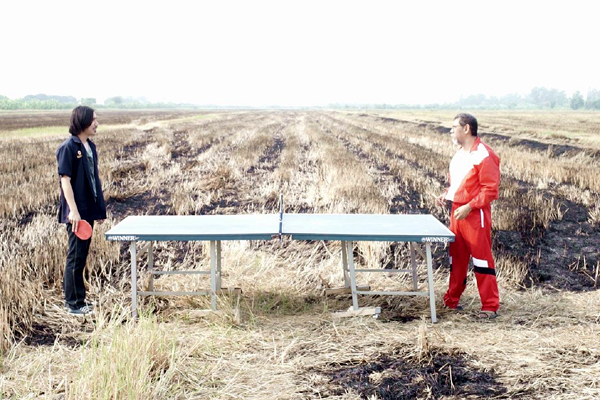
There were chuckles for some other entries, such as Jakkrapan Srivichai's Horror Radio, in which a security guard who listens to spooky radio serials calls into the station one night with his own story. Symmetry by Ukrit Malai had an older fellow reflecting on a different, parallel life of a brother (or was it his son?), which sees living-room recliners and a Playstation (also a ping-pong table) transported magically from a house to an open field. And there was good fun to be had in Director and Actor, directed by and starring Weera Rukbankeru, which had him struggling to direct himself in various scenes.

And the festival wouldn't be complete without at least one mysterious jungle thriller. Perennial festival entrant Pramote Sangsorn headed into the woods for Sudd Song Nor, which had a reporter camping out with a big-game hunter in search of the last rhino. Homoerotic tendencies surface in a discussion about taking the rhino's horn, but leaving the unseen beast alive. Later on, both men cover themselves from head to toe with mud.

Prince Johnny, winner of the Payut Ngaokrachang Award.

I really connected with the block of animated entries in the Payut Ngaokrachang Award competition, which is named for Thailand's pioneering maker of animated shorts and features. The audience was sparse for the Sunday morning show, but included a cool farang dad who brought his two small children. Still, I heard gasping from the kids when the cartoons took dark turns, which were frequent.

The top prize Winner Prince Johnny by Patradol Kitcharoen was wonderfully morbid with its story of a fairy-tale prince trying to revive the corpse of a long-dead princess locked in a tower. Bleaker still was a runner-up winner Sound of the Silence by Akapop Khansorn, which deals with an imprisoned woman.

There was conflict aplenty in Stained White by Thanchanok Phruetkittiwong, Vichuda Surattichaikul and Supisara Songpirote, in which Red City kids and Green City kids just want to play together but instead have to fight. There was also the special mention winner Black-White by Jaturon Jetwiriyanon, which had Germanic-looking chess pieces in an endless war – no worries about Nazi imagery here, it's used to show the horror of war and isn't glorified as it has been in cases that crop up from time to time in news about Thailand.

Simply entertaining entries included the special mention winners Breaking Zoo by Prakasit Nuansri (about an escaped overheated gorilla); Lamp by Narueporn Winiyakul (about a fishing cat making friends with cute anglerfish) and the fun football-themed Kickoff by Twatpong Tangsajjapoj.

Luukmaai, a finalist entry in the Payut Ngaokrachang competition.

I'm surprised Luukmaai by Rachaneekorn Uthaithammarat didn't win a prize. The story of a forest-dwelling man who befriends a tree spirit, the character design really reminded me of Payut's work in The Adventure of Sudsakorn, which to me is remarkable, because not many Thai animators actually seem to be influenced by Payut, who had his own style, but could be compared to Tex Avery or maybe Disney.

These days, most Thai animation takes Japanese anime as its cue, not that there's anything wrong with that. The anime style was especially evident in the crazily sick Gokicha Love Story by Chidchanok Saengkawin, which had a cockroach who thinks she's a princess trying to woo a guy, but the guy is horrified because he only sees her as an insect. Festival Rush by Chawanat Rattanaprakarn also looked like anime, but told a distinctively Thai story, with a boy at a temple fair chasing down masked criminals who stole the doll he won for his sweetheart.

And 3D computer graphic animation continues to progress. Aside from the award-winners like Black-White and Breaking Zoo, memorable entries included the heist comedy The Sneaker by Chattida Ajjimakul, and the nature-themed To the Light by Jane Horsakul.

Worth noting is this year's festival title, a "bumper" that is created new each year by various notable filmmakers. This year, it was the turn of Chulayarnon Siriphol, a perennial award-winner in past years, whose entries are thought-provoking, satiric and, most importantly to me, entertaining. Chualyarnon actually did two titles. One had images of soldier statues and people offering prayers to a shrine, and an auditorium with an empty movie screen. I won't comment further on what I think it means. Chulayarnon also did a stop-motion thing involving birthday candles with nails stuck in them so they resembled insects, crawling over someone's skin. Of course, both festival titles had images of eggs, which is part of the iconography of the Thai Short Film and Video Festival.

New to the festival this year is an additional cash prize, free equipment rental and use of a production crew to the top-prize winner of the R.D. Pestonji Award from VS Service, a company that has long been involved with providing services to foreign movie productions. Established in 1985 with a single generator to hire out, among VS Service’s early clients was Santa Film, a production services firm run by a son of Pestonji, who is regarded as Thailand’s first auteur filmmaker. The award is especially symbolic for the head of VS Service, cinematographer Pithai "Pete" Smithsuth, who has now taken over the company his father started.
Symmetry, a finalist entry in the R.D. Pestonji competition.

Anyway, here are the winners in the 19th Thai Short Film and Video Festival:

Popular Vote

  • Dreamscape by Wattanapume Laisuwanchai


International Competition

  • Best Short Film: Rene R Letters by Lisa Reboulleau (France)
  • Special Mention: Fallen Leaves by Masha Kondakova (Ukraine) and Moving in Circles by Maxim Dashkin (Russia)


R.D. Pestonji Award

  • Winner: After Image by Patana Chirawong
  • Runner-up: Motherland by Varinda Naronggrittikun; Neither Here Nor There by Skan Aryurapong
  • Special Mention: Our Footprints by Hta Kwa


White Elephant Award (undergraduate students)

  • Winner: Rose Moon and the Missing Sun by Tulyawat Sajjatheerakul
  • Runner-up: The Country Boys by Krailas Phondongnok; Temperature of Roomtone by Pamornporn Tandiew
  • Special Mention: Glowstick by Pahphawee Jinnasith; Once Upon a Time by Jantraya Suriyong and Siripassorn Umnuaysombat; Oun Kwa Nhee Kor Phee Leaw by Yanisa Pornawalai


Special White Elephant (youth films)

  • Winner: Last Summer by Dapho Moradokpana
  • Runner-up: What a Wonderful World by Jirapat Thaweechuen, Thanawat Noomcharoen and Pu-ton Thongtan
  • Special mention: Untitled by Rachapol Sangsri and Tanyawat Sajjateerakul


Payut Ngaokrachang Award (animation)

  • Winner: Prince Johnny by Patradol Kitcharoen
  • Runner-Up: Fragile by Pennapa Chanwerawong; Stained White by Thanchanok Phruetkittiwong, Vichuda Surattichaikul and Supisara Songpirote; Sound of the Silence by Akapop Khansorn
  • Special Mention: Breaking Zoo by Prakasit Nuansri; Lamp by Narueporn Winiyakul; Black-White by Jaturon Jetwiriyanon and Kickoff by Twatpong Tangsajjapoj


Duke Award (documentary)

  • Winner: Sinmalin by Chaweng Chaiyawan
  • Runner-up: Michael’s by Kunnawut Boonreak; The Spirit of the Age by Wichanon Somumjarn
  • Special Mention: Chumchon Khon Khaya by Thitipat Rotchanakorn and Pawee Melanon; Pak Bara by Apichon Rattanapayon and Watcharee Rattanakree


Cinetoys Best Cinematography Award

  • Last Scene by Rajchapruek Tiyajamorn


Vichitmatra Award

  • My Grandfather’s Photobook by Nutthapon Rakkhatham and Phatthana Paiboon
  • Fon by Aekaphong Saranset
  • If You’re a Bird, I’ll Be Your Sky by Visuta Matanom
  • Yhahok by Nathan Homsup


BACC Award

  • Once Upon a Time by Jantraya Suriyong and Siripassorn Umnuaysombat
  • Dreamscape by Wattanapume Laisuwanchai


Pirabkhao Award

  • Sinmalin by Chaweng Chaiyawan


Best Actor

  • Arachaporn Pokinpakorn from Glowstick


(Adapted from an article in The Nation)

Monday, February 23, 2015

Memory! fest has sweet treat for Bangkok


Sugar Is Not Sweet (น้ำตาลไม่หวาน, Namtan Mai Wan), a hyper-colorful romantic comedy by Thai cinema's pioneering auteur, R.D. Pestonji, is among a selection of classic films set to screen in the Memory! International Film Heritage Festival from February 26 to March 6 in Bangkok.

From 1965, Sugar Is Not Sweet was the final feature from Pestonji, and is one of his more-personal efforts with its reflection on his own Indian heritage. Starring Sombat Metanee in one of his early leading roles, the story is about the slacker son of a Chinese-Thai businessman who has promised his boy's hand in marriage to the orphaned daughter of his late Indian business partner. But the guy doesn't want to marry a "roti" (a racist colloquialism). He's rather stay with his vain gold-digging Thai girlfriend.

Alternating venues between the Alliance Francaise in Bangkok and the Thai Film Archive in Salaya, Nakhon Pathom, the Memory! festival will screen 11 films in all.

The selection includes three by the masters of the silent era, The Circus by Charles Chaplin, Safety Last by Harold Lloyd, and, in a fitting tie-in with the Film Archive's own steam locomotive, Buster Keaton's The General.

Under the theme of "Laughter!" the fest also has a tribute to French comedy kings Jacques Tati and Pierre Etaix with Tati's Playtime and Etaix' Happy Anniversary and The Great Love.

Another entry is 1955's The Ladykillers, the classic Ealing Studio comedy directed by Alexander Mackendrick and starring Alec Guinness in a positively sinister turn as the leader of a gang of thieves.

And from Asia, there's Good Morning by Yasujiro Ozu and Before Rising Up the Rank, a 1965 black-and-white comedy from Mongolia's Mongol Kino studio.

Originating in Phnom Penh in 2013, the Memory! fest is supported by the Technicolor Foundation for Cinema Heritage with an aim of promoting and preserving the world's film heritage. So it's only natural that it would come to Bangkok and help bolster the Thai Film Archive's similar efforts.

Admission is free, though online reservations are recommended. For the schedule and more details, please see a recent article in The Nation or check the festival's Facebook page.

Monday, October 13, 2014

Fan Chan, Nang Nak, Monrak Transistor, Mysterious Object, Santi-Veena added to Registry

The Culture Ministry and the Thai Film Archive have added another 25 films to the National Film Heritage Registry, running from 1897's visit to Stockholm by King Chulalongkorn (Rama V) to 2003's smash-hit childhood drama Fan Chan and including 1953's Santi-Veena, which was thought for years to be lost.

The oldest entry, King Rama V visits Stockholm, is footage that was found last year. According to Film Archive director Dome Sukwong it is one of the two oldest surviving filmed records of Thais. The other, a 2011 Registry entry, is Rama V's visit to Berne, Switzerland, also in 1897, by Francois-Henri Lavancy-Clarke. In Sweden, pioneering cinematographer Ernest Florman captured Chulalongkorn and King Oscar II greeting each other with kisses.

Established in 2011, the film registry now numbers 100 entries. The latest additions were announced by Culture Minister Vira Rojpojchanarat on October 4 at the Archive.

This year's listing also includes Apichatpong Weerasekthakul's debut Mysterious Object at Noon, Pen-ek Ratanaruang's Monrak Transistor and Nonzee Nimibutr's Nang Nak, Oscar-submitted social-issue dramas by M.C. Chatrichalerm Yukol and Bhandit Rittakol and two films with cinematography by pioneering auteur R.D. Pestonji.

Among Pestonji's films is the 1953 drama Santi-Veena, which had been feared lost.

Sanchai Chotirosseranee, deputy archive director, said that copies of Santi-Veena were recently discovered at Gosfilmofond in Russia and at the China Film Archive. "We are now trying to do digital restoration," Sanchai says.

A romantic drama, Santi-Veena was the first Thai film to win awards overseas, grabbing four prizes at the 1954 Asia-Pacific Film Festival in Tokyo, including best cinematography for Pestonji, who was awarded a Mitchell camera. In a quirk of history, he was charged $5,000 tax for the $16,000 camera. Also, the filmmakers were fined 1,000 baht by Thai authorities for failing to clear the film with censors before exhibiting it overseas. The camera is now the centerpiece of an exhibit with a wax figure of Pestonji at the archive's Thai Film Museum.

In the following list, Sanchai adds information about some of the lesser-known entries.


2014 Registry of Films as National Heritage

  1. King Rama V visits Stockholm, (ร. ๕ เสด็จประพาสกรุงสต็อกโฮล์ม ), 1897 – Cinematographer Ernest Florman filmed the meeting of Chulalongkorn and Sweden's King Oscar II. 
  2. Siamese Society, 1920 – A record of Siamese tradition and culture by noted travelogue maker Burton Holmes. 
  3. King Rama VII Visits Indochine (เสด็จอินโดจีน พ.ศ. ๒๔๗๓ ), 1930 – The film is also the first football match between the Siamese national side and Saigon's team.
  4. Sound Patch Work, 1930 – Introduces the first Thai radio station in Phaya Thai Palace.
  5. Past Pattani (ปัตตานีในอดีต ), 1936 – Depicts tourist attractions, the constitution ceremony and a boxing match between famous fighters Saman and Sompong. 
  6. Handful of Rice (ข้าวกํามือเดียว), 1940 – A Swedish filmmaking team was invited by high-society northerners. Shot in Chiang Mai, it shows the importance of Thai rice.
  7. Pry Ta Khean (พรายตะเคียน ), 1940 – The oldest surviving Thai ghost film includes many comic gags that are used in Thai horror comedies to this day.
  8. The Birthday Ceremony of Major General Luang Piboon Songkarm, the Prime Minister at The Parliament at Suan Kulap Palace (งานวันชาตะ นายพลตรีหลวงพิบูลสงคราม นายกรัฐมนตรี ณ ทําเนียบ วังสวนกุหลาบ ), 1941 
  9. Brother (พี่ชาย ), 1951 – Adapted from a stage play, the film starred many important Thai actors.
  10. Jumruen–Jimmy (จําเริญ -จิมมี่ , 1953 – World-champion boxer Jimmy arrives in Bangkok to face his opponent Jumruen.
  11. Santi–Veena (สันติ -วีณา , 1953 – Directed by Tawee "Kru Marut" na Bangchang with a screenplay by Vichit Kounavudhi and cinematography by R.D. Pestonji, it won three prizes at the 1954 Asia Pacific Film Festival in Tokyo, the first Thai film to be awarded overseas.
  12. Forever Yours (ชั่วฟ้าดินสลาย, Chua Fah Din Salai), 1954 – Kru Marut with cinematographer R.D. Pestonji directed this adaptation of Malai Choopiniji's novel about adulterous young lovers chained together. 
  13. Poor Millionaire (เศรษฐีอนาถา ), 1956 – The winning Best Thai Film of the first national film awards in 1957.
  14. Envy Love (รักริษยา, Rak Ritsaya), 1957 – A romantic drama starring 1954 Miss Thailand Universe Ammara Assawanon, a.k.a. "the Thai Elizabeth Taylor".
  15. Rice Carriage, Threshing Rice, Rice Mill, Wedding in Southern Thailand, (หาบข้าว นวดข้าว สีข้าว แต่งงานภาคใต้ ), 1968-69 – A record of many interesting Thai rice customs.
  16. Virginity Market (ตลาดพรหมจารีย์ , Talad Prom Charee, 1973 – Veteran director Sakka Charuchinda's drama criticizes male hegemony in Thai society with a story about a fisherman who sells his stepdaughter to buy a new motor. 
  17. Chinatown Montage (สําเพ็ง, Sampeng), 1982 – Surapong Pinijkhar directs this pioneering experimental look at Bangkok's Chinatown, from morning to night.
  18. Silhouette of God (คนทรงเจ้า , Kon Song Jao), 1989 – Jazz Siam's social-issue drama for Five Star Production takes a critical view of black-magic beliefs in Thai society. Classic screen couple Santisuk Promsiri and Chintara Sukapatana star.
  19. The Elephant Keeper (คนเลี้ยงช้าง , Kon Liang Chang), 1990 – M.C. Chatrichalerm Yukol addresses environmental issues in this gritty action-drama about a mahout (Sorapong Chatree) who takes his elephant to work in the illegal timber trade. It was a submission to the Academy Awards.
  20. Rolling Stones, กลิ้งไว้ก่อนพ่อสอนไว้ , Gling Wai Kon Por Son Wai, 1991 – A famous teen film by director "King" Somching Srisuparp.
  21. Once Upon a Time ... In the Morning (กาลครั้งหนึ่งเมื่อเช้านี้ , Kalla Khrung Nueng ... Muea Chao Nee), 1994 – Another Oscar submission, Bhandit Rittakol's social-issue drama deals with children who run away from their divorcee mother (Chintara Sukapatana). They fall in with gangsters as they travel cross-country to find their father (Santisuk Promsiri).
  22. Nang Nak (นางนาก ), 1999 – Nonzee Nimibutr's adaptation of the famous ghost story of Mae Nak of Phra Khanong was a box-office hit and swept up most of the National Film Association Awards, the Netpac Award at Rotterdam and several prizes at the Asia-Pacific Film Festival.
  23. Mysterious Object at Noon (ดอกฟ้าในมือมาร, Dokfa Nai Meuman), 2000 – Winner of awards in Fribourg, Yamagata and Vancouver, Apichatpong Weerasethakul's debut feature is an experimental documentary in which a film crew travels the length of Thailand, getting various folks to take part in an "exquisite corpse" storytelling exercise.
  24. Monrak Transistor (มนต์รักทรานซิสเตอร์), 2001 – An Oscar submission and winner at festivals and the National Film Association Awards, Pen-ek Ratanaruang's sprawling musical-comedy-drama pays tribute to singer Suraphol Sombatcharoen with a story about a young man who goes AWOL from the army and leaves his wife in order to be a big luk thung star.
  25. Fan Chan (แฟนฉัน, a.k.a. My Girl), 2003 – The smash-hit childhood drama launched the careers of six young directors and led to the formation of the GTH studio.

Related posts:


Thursday, September 4, 2014

Thai Short 18 review: R.D. Pestonji 2-3


Thai short films entered the Twilight Zone in the R.D. Pestonji competition of the 18th Thai Short Film and Video Festival. Indie filmmakers blasted into the realms of space and fantasy, as well as the spiritual and, of course, political, in the range of entries, which featured such established names as Kongdej Jaturanrasmee and Wichanon Somumjarn.

Even without an elaborate spaceship, Paranoid Team's sci-fi thriller Narayana’s Arrow Spaceship: Between the orbits of Mars and Jupiter (ยานศรนารายณ์: ระหว่างวงโคจรดาวอังคารและดาวพฤหัสฯ ) demonstrated how surprisingly effective a simple set can be in relating the slow-burn madness of long-distance interplanetary travel. The crew is two, plus their fantastic dial-up-Internet-powered android assistant – a computer, ship's chaplain and, presumably, sex toy, wrapped up into one. There are two crewmen, from the top and bottom of the social strata in Thailand, and only one can live if the ship is to make it back to Earth.


A Forest is Always Full of Surprise (ในป่าเต็มไปด้วยเรื่องอัศจรรย์ ) has last year's big award winner Eakalek Maleetipawan revisiting the mysterious Endless Realm (as well as a 2011 winner A Moment in the Rainforest). The ante is upped this time around with a wolf-costume-man shadowing a bow-hunter in the sun-dappled woods, down by the babbling creek.

Myth of Modernity by Chulayarnon Siriphol blasted back up into the heavens, starting out as a documentary on how Buddhist cosmology influences Thai architecture. The scripture's Mount Meru is represented in everything from the spike on a guard's helmet to the pyramid-shaped structures atop Bangkok's skyscrapers. Eventually, these pyramids, constructed out of fluorescent light tubes, become vehicles to the next plain of enlightenment, and they go up and up and up, endlessly. But where, really? Coincidentally, the documentary's talking-head "independent scholar" and break-out star was none other than filmmaker and festival technician Nuttorn Kungwanklai, who happened to be projecting the film he was in.

Back on Earth, Wichanon Somumjarn dealt with a young woman's struggles in Somewhere Only We Know (จุฬญาณนนท์ ศิริผล), a project he put together through a crowdfunding campaign. The young lady struggles to make ends meet in an accounting office, plus she needs to support her mother. In the midst of all this, her ex-boyfriend stops by to get his "stuff". Why do they always leave "stuff" behind?

There were gales of laughter for Pairach Khumwan's Too Good To Be True (คนดี (ที่เธอไม่รัก) ), a playful satire involving a university student's clumsy attempt to woo a pretty girl on campus, but his best friend gets in the way.


Romance and travelogue mixed in the R.D. Pestonji 3 lead-off entry A Bat Has Flown (รางวัลรัตน์ เปสตันยี 3), following the life of a Thai restaurant worker in Sydney. No lost elephants here. We see the city through his eyes as he particpates on the fringes of a marathon run, and hangs out by the bridge. Later, he spends an evening with a fellow Thai, and, yeah, well, there are bats, giant fruit bats.

The Way of Lives (วิถีชีวิต ) by Hta Kwa and produced by Chiang Mai's Friend Without Borders, is a look at Karen families driven from their homes in mountain forests to a settlement in the lowlands, where they must abandon their traditions and learn new ways of farming and living, even if it doesn't mean living on the farm.

Kongdej Jaturanrasmee gives viewers an up-close and personal look at his talented twin daughters in Udon (อุด้ง ). Between footage of the girls, studying, practicing their music – one on piano and the other on a finicky violin – there are text-message intertitles. None were subtitled, but the film was well-received. Kongdej said later he made the film on a low budget and didn't account for subs. In fact, that was all explained in the text and that's why so many folks were cracking up, for that, and other things.


Crazy as it seems, there are still folks making films on film, and in the case of Endless, Nameless, Pathompon Tesprateep and producer Pathompong Manakitsomboon rounded up the troops to make a film on Super 8 stock, and then hand-process the reels. Others taking part in the cinematography were music-festival videographer Danaya Chulphuthiphong and video artist Taiki Sakpisit. The result is flickering footage of a hissing, spitting cobra, its head swaying back and forth, and back and forth, which is what my head was doing. It became a dream, and then, like Tommy Lee Jones in No Country for Old Men, I woke up.

And so it was up to the appropriately titled Endslate by Chinavorn Nongyao to ease me back into the world. The 15-minute short was divided into two, starting with a comedy bit about a director trying to shoot a scene at the Democracy Monument in Bangkok. Prominent indie-film cinematographer, wearing sunglasses, naturally, shakes his head at the ridiculousness of the proceedings. Things calm down during the shooting of a restaurant scene – a poignant end for a film-festival program that honors one of Thai cinema's pioneering auteurs.

Unfortunately, because of work conflicts, I was unable to see R.D. Pestonji 1, which included a new work by Sivaroj Kongsakul, Endlessly (ศิวโรจณ์ คงสกุล ). There was also another Auntie Maam adventure, featuring the maid of Six to Six and Hi-So in Auntie Maam Has Never Had a Passport (ดาวอินดี้ ), directed by Sorayos Prapapan and a follow-up to last year's Boonrerm.

Tuesday, June 3, 2014

Thai Film Archive treasures unearthed on YouTube


Every day, for the past year or so, the Thai Film Archive has been uploading clips to its official channel on YouTube, sharing a wealth of public-domain footage, this-day-in-history newsreels, documentaries and other historical film artifacts.

The effort is a fantastic public service, and makes the archive's holdings available to everyone, or at least those who have an Internet connection.

However, it's not very English-friendly – the Thai Film Archive, after all, exists to serve the Thai people first. So for those who don't understand Thai, keeping track of the significance of the uploads can be a daunting task.

Thankfully, The Nation has an article that points to a few of the highlights.

Among them is the first Thai feature film, 1927's Chok Song Chun (โชคสองชั้น, Double Luck). A 2012 entry in the Films as National Heritage Registry, just 55 seconds is what remains of the movie, mostly consisting of a fight scene and a car chase. It was made by the Wasuwat Brothers' Sri Krung Studio, which was Thailand's first major movie studio. Today, the studio's bright yellow building has been replicated on the grounds of the Thai Film Archive in Salaya, and it houses the Thai Film Museum and serves as one of the archive's icons.

Most significant is another 2012 entry in the film registry, the first Thai animated film, Payut Ngaokrachang's Hed Mahassajan (เหตุมหัศจรรย์ , The Miraculous Incident) from 1955. In the seven-minute short, Payut cheekily inserts himself into the action as he witnesses the events leading up to a traffic pileup in Bangkok. Payut has been called "the Walt Disney of Thailand", but the film reminds me more of Tex Avery.

Do not adjust your settings – there is no audio with the clip. It was made during the heyday of live dubbing, in which a troupes of voiceover artists would accompany films and provide all the dialogue and sound effects during the screenings. And now that Hed Mahassajan is on YouTube, it's ripe for remix treatments. Perhaps budding filmmakers, animators, composers and sound-effects artists might try their hand at adding soundtracks of their own.

And one more gem to feast your eyes on, and listen to, The Diamond Finger – an eye-poppingly gorgeous staging of a classical Thai dance episode from the Ramakien, the Thai version of the Ramayana. From 1958, the 27-minute film is directed by pioneering auteur Ratana Pestonji and is staged by the Fine Arts Department, with narration by Thai statesman MR Kukrit Pramoj.

Out of respect to the Archive and the care it has taken, I won't embed the videos here, so head on over to the YouTube channel and start watching.

Tuesday, September 3, 2013

Thai Short 17: Award winners, R.D. Pestonji competition review

All the winners. Photo courtesy Thai Film Foundation.

The story of a forest encounter between a border-patrol officer and a villager was among the top award winners at the 17th Thai Short Film and Video Festival, which wrapped up on Sunday at the Bangkok Art and Culture Centre.

Endless Realm by Eakalak Maleetipawan, in which a guitar-strumming artist hangs up sketches on a clothesline in the forest and breaks up the monotonous routine of a border guard, won the top-prize R.D. Pestonji Award in the category for general filmmakers. The prize is named after Thailand's pioneering auteur, Ratana Pestonji. Endless Realm also won the BACC Award from the Bangkok Art and Culture Centre.

Rights issues were a theme that linked many of the entries in the festival, including another big winner, Fate, by veteran filmmaker Boonsong Nakphoo. It follows a man as he's released after seven years in prison in a southern Thailand border town. None of the places he remembers still exist, so he opts to catch the first train back home to Isaan. With the trains delayed by a bombing on the line, his idling about waiting raises suspicions of the police, and he's detained. Fate won the Pirabkhao Award from the 14 October 1973 Memorial Foundation for films that express freedom and equality issues and also earned a special mention in the R.D. Pestonji category.

Two runner-up winners in the R.D. Pestonji competition were also strong human-interest stories, Oriole (นกขมิ้น) by Kaenipa Phanakorn, about a garment-worker mother struggling to care for her troublesome teenage son who has Asperger's Syndrome, and The Sweatshop (นกขมิ้น ) by New York University film student Chin Tangsakulsathaporn, a fact-based account of a trafficked immigrant girl's escape from an illegal garment factory in the U.S.

Another winner from the Pestonji line-up was Ta (ตา) by Kunlakan Chanakan Mamber, the story of a young girl scared by a ghost under her bed. Her mother assures her there's nothing to be afraid of but then tells her a scary story about how she accompanied the girl's late ghostbusting granddaddy to a job that really puts the pee in the Thai word for ghost. The richly told tale won the popular-vote Audience Award.

She Is My Best Friend, the top-prize-winner in the White Elephant student competition.

Two Pestonji entries were among the four winners of Vichitmatra Award for "distinctive achievements in filmmaking". Kai Jik Dek Tai Bon Pak Ong (ไก่จิกเด็กตายบนปากโอ่ง) by Chulayarnon Siriphol was the tale of an elderly grocery shop owner coping with knee-replacement surgery. The other was a smashing music-video entry by sound-and-vision sorcerer Taiki Sakpisit, The Age of Anxiety. Featuring a guitar-feedback squall by the rock band Moth Drakula, it opens with a long shot of just white fog or clouds but eventually a figure of a guitar player emerges from the mist. The scene then cuts to found footage of an old Thai film, possibly a Sompote Sands period melodrama starring Sombat Metanee and Sorapong Chatree. The frames of the footage are chopped and overlayed for a stunning, seizure-inducing strobe effect. From viewers still conscious at the end, it got big cheers.

Going home empty handed from the prize ceremony but still noteworthy were two other Pestonji entries that shared the same cast, All-Powerful! by Aditya Assarat and Boonrerm by Sorayos Prapapan. They both featured Jirawan Saikongkham and Karuna Lukthumtong as maids.

Aditya's was a sequel to his Six to Six, reuniting the security guard (Graison Chainam) and his co-workers, the young maid played by Jirawan and the older auntie (Karuna), who worked at the apartment building in Six to Six and the feature Hi-So. The guard is now selling quack-medicine remedies, and he goes chasing an actual white rabbit. Aditya himself portrays the homeowner.

Boonrerm, which has been well-traveled on the festival circuit this year, has Jirawan again as a maid. She endures demeaning, inhumane treatment by her "crazy woman" employer. At one point she is locked up in a dog's cage. She's then blamed for losing a cookbook and forced her to sift through trash at the dump to find it. Luckily young Boonrerm has a friend, the auntie maid again played by Karuna, who comes to the rescue.

Boonsong doubled down in the Pestonji competition with another well-made entry, Lamoon the Legend (ละมูล ตำนานเพลงพื้นบ้าน), about a folksinging granny who makes daily rounds to visit her elderly friends and keep her art alive. She walks the country roads, hunched over, with her little granddaughter following. Then, one day, her friends are no longer there, and perhaps her art won't survive.

Ta, winner of the popular-vote Audience Award.

Cult indie filmmaker Ratchapoom Boonbunchachoke offered another of his satires on Thai culture with La double vie de Maniejan (มะนีจันเปล่งเสียงไม่ได้ในทวิภูมิทางภาษาของคุณ), which commented on ethnic and gender roles in voiceover narration. Unfortunately, it wasn't subtitled, so only the Thai-fluent were really in on the joke. Too bad, because Ratchapoom has been doing this for awhile now and he's ripe for attention beyond our borders.

Other entries were The Number You Have Dialed Is Not Available In This Time (2413482) by Suphisa Kittikunarak, in which a young couple becomes estranged, and Unknown Territory (เขากะลา ) by Eakarpon Settasuk, a humorous documentary-style account of three filmmakers investigating a transdimensional portal for extraterrestrials at Kala Mountain.

Sivaroj Kongsakul, who directed the festival's egg-themed bumper that's screened before every program, offered Homemade (หนังบ้าน) , which was an extension of the autobiographical themes from his feature debut Eternity (Tee-Rak). Here, he interviews his schoolteacher mother as she recounts all the places she's lived and how she's not yet realized her dream of owning her own property.

The International Competition had an especially strong and accomplished selection this year. The top prize went to Childhood Has Gone by China's Zhao Wei Shou, a wistful ode to a childhood friend moving away. A special mention went to the laugh-out-loud Welcome and Our Condolences by Leon Prudovsky, recounting a Russian family's immigration to Israel that's complicated when an aunt dies aboard the flight. Another special mention was Amateur Filmmaker by Volha Dashuk of Belarus follows the country's oldest living amateur filmmaker as he shoots betacam video footage of the lives of elderly farmers in the picturesque countryside. And a third mention was The Living Also Cry by Basil Da Cunha. The surreal tale is of a Portuguese dockworker who wants spend his life savings to move to Sweden, but his wife has spent the money on a washing machine.

Other winners included entries in the White Elephant Award competition for college student filmmakers, with the top prize going to the tale of badminton-playing gal pals She Is My Best Friend (เด็กสาวสองคนในสนามแบดมินตัน) by Jirassaya Wongsutin. Wang Ploeng Intersection (สี่แยกวังเพลิง), Natpakan Khemkhaw's story of a poor family hit by a draconian regulation of the 2008 Film and Video Act, was among the runners-up.

There was also a special competition, Jenesys 2.0, to pick films by schoolchildren to take part in this year's edition of the Japan-East Asia Network of Exchange for Students and Youth.

Endless Realm, the top award-winner in the R.D. Pestonji competition.

Bangkok Art and Culture Centre Award

  • Endless Realm (อาณาจักรใจ), Eakalak Maleetipawan

Kodak Film School Competition

  • The Pilgrim (พระธุดงค์), Harin Pasongthai (Maneerat Srinakarin, cinematographer)

Paribkhao Award

  • Fate (ชะตากรร), Boonsong Nakphoo

Duke Award documentary competition

  • Winner: Nyob Zoo (Hello), Nuttasak Veeranorapanich
  • Runner-up: Voices of the Spirit Cave (พันปีผีแมน), Suporn Shoosongdej
  • Runner-up: Caretaker (Fak Liang (ฝากเลี้ยง), Panu Saeng-Xuto

International competition

  • Winner: Childhood Has Gone, Zhao Wei Shou (China).
  • Special Mention: Welcome and Our Condolences, Leon Prudovsky (Israel)
  • Special Mention: Amateur Filmmaker, Volha Dashuk (Belarus)
  • Special Mention: The Living Also Cry, Basil Da Cunha (Switzerland, Portugal)

R.D. Pestonji Award competition

  • Winner: Endless Realm (อาณาจักรใจ), Eakalak Maleetipawan.
  • Runner-up: Oriole (นกขมิ้น), Kaenipa Phanakorn
  • Runner-up: The Sweatshop (นกขมิ้น ), Chin Tangsakulsathaporn
  • Special mention: Fate (ชะตากรร), Boonsong Nakphoo

Payut Ngaokrachang Award animation competition

  • Winner: Nunui (หนูนุ้ย ), Chanya Hetayothin
  • Runner-up: Vision (视力), Keawalee Warutkomain
  • Runner-up: Pourquoi Chercher Ailleurs (Why Do You Search Somewhere Else), Saknarin Thubjaroen
  • Special mention: 8, Kraisit Bhokasawat
  • Special mention: Life of Fire (วิถีไฟ), Rusharil Hutangkabodee
  • Special mention: Breathe, Twatpong Tangsajjapoj

Jenesys 2.0

  • Circle by Pathumthong Wilai
  • It's My Turn by Panat Chulkasem
  • Myself by Sittiwat Tiptanaorlarn
  • What Would you Do by Alisa Piang
  • Kab Su Jud Rem Ton by Krit Chareonsawad
  • Krai Tum by Panitan Kraikroun
  • Tua Talok by Usa Thepbutr
  • Mua Chan Don Rung Kae
  • Ha Ruang by Supanee Limrojnukul

Special White Elephant (pre-college students)

  • No winner, special mentions only.
  • Do Not Disturb (ดึกแล้วคุณขา), Teerach Wangwisarn
  • The Cortege, Teerapat Ngathong
  • The Way I Want (วันที่ฝันเป็นจริ), Supanee Limrojnukul

White Elephant Award student film competition

  • Winner: She Is My Best Friend (เด็กสาวสองคนในสนามแบดมินตัน), Jirassaya Wongsutin
  • Runner-up: The Pilgrim (พระธุดงค์), Harin Pasongthai
  • Runner-up: Wang Ploeng Intersection (สี่แยกวังเพลิง), Natpakan Khemkhaw
  • Runner-up: Vicious Cycle, Aroonakorn Pick
  • Special mention: Synchronicity, Pongsathon Udomthongkasem

Best actor

  • Natnicha Puespanich from Awasarn Loksuay (อวสานโลกสวย), screened in the Digital Forum

Vichitmatra Award

  • Deleted, Nitaz Sinwattanakul
  • Yoy (หยอย), Tosapol Raengthong (Digital Forum entry)
  • The Age of Anxiety, Taiki Sakpiset
  • Kai Jik Dek Tai Bon Pak Ong (ไก่จิกเด็กตายบนปากโอ่ง), Chulayarnon Siriphol

Audience Award

  • Ta (ตา), Kunlakan Chanakan Mamber

Saturday, February 16, 2013

It Gets Better leads Subhanahongsa nominees

Transgender writer-director Tanwarin Sukkhapisit's multi-generational story of transgender issues and romance It Gets Better is the leading nominee for the Thai film industry's top prize, the Subhanahongsa Awards (รางวัลภาพยนตร์แห่งชาติ สุพรรณหงส์). It received nods in nine out of 16 categories, including best picture, best director and best screenplay.

Chookiat Sakveerakul's sentimental three-segment drama Home, the animated fantasy Yak: The Giant King (ยักษ์) and the New Year's Eve psychological thriller Countdown (เคาท์ดาวน์) each have seven, including best picture and best director.

And another Best Picture nominee, Oriental Eyes' family drama Together Wan Tee Rak (Together วันที่รัก), has five nominations, including best director for Saranyu Jiraluk.

Although independent films have done well at the Subhanahongsas in recent years – two indie successes from the festival circuit, P-047 and the Busan New Currents winner 36, which both had well-attended limited theatrical runs in Bangkok – were shut out entirely. However, 36 director Nawapol Thamrongrattanarit scored a nod for sharing screenwriting credit on Home, and P-047 helmer Kongdej Jaturanrasamee got a nomination for best original song on Kantana Animation's Echo Planet.

Also, another independent movie, Tongpong Chantarangkul's I Carried You Home (Padang Besar, ปาดังเบซา), received three nominations, including best screenplay.

A surprise was the indie horror omnibus 9-9-81 (บอก-เล่า-9-ศพ, Bok Lao 9 Sop), which scored five nominations, including best screenplay and best cinematography for its many cameramen. The comic-book-like tale about a suicidal bride was divided into nine segments by different directors, each offering different viewpoints from the bride's lover, her friends, family and neighbors.

Also with five nominations was the ratings-testing period erotic melodrama Jan Dara: The Beginning, including supporting actor and actress nods – Chaiyapol Julien Poupart as a Muay Thai-fighting servant boy and Jan's loyal friend and Bongkot Kongmalai in her revealing turn as Jan's doting aunt/stepmother Waad.

In the best actor category, Jessadaporn Pholdee picked up a nomination for his portrayal of the guilt-ridden widower surgeon in M-Thirtynine's horror thriller I Miss U (รักฉันอย่าคิดถึงฉัน, Rak Chan Yaa Khid Tueng Chang. He also starred in Super Salaryman, but that only got nods for supporting players.

In a controversial choice, David Asavanond is nominated as best actor for his sadistic drug dealer named Jesus in Countdown, a role he played in director Nattawut Poonpiriya's original short film. However, the top-billed actor in the feature was Pachara Chirathivat.

The Shambhala siblings Sunny Suwanmethanon and Ananda Everingham both earned nominations for the Tibet spiritual road-trip drama, with Sunny up for best actor as the more-straitlaced brother and Ananda, playing his drunken, irresponsible bro, as supporting actor. Shambhala (ชัมบาลา) also earned a cinematography nod.

Also with three nominations is the 1960s crime drama Antapal (อันธพาล), with Krissada Sukosol Clapp up for best actor for his intense portrayal of an old-school gangster. It was also nominated for costumes and art direction.

The supporting actor nominations include Parama Imanothai for his role as a boy toy to an aging transsexual in It Gets Better and Ruangsak Loychusak as the wealthy southerner husband of a northern bride in Home.

Young actor Setthapong Piangpor is up for his supporting role as a trainee from upcountry in the office comedy Super Salaryman (ยอดมนุษย์เงินเดือน, Yod Manut Nguen Duen), as are actresses Sakuntala Tienpairoj as a mid-level manager and Jirapa Wongkosawan as a suffering secretary.

Anther workplace comedy, ATM Er Rak Err (ATM เออรัก เออเร่อ), also scored an acting nomination, best actress for Preechaya Pongthananikorn, who portrayed a banking executive in a secret romance, racing to recover lost cash from a malfunctioning automated-teller machine.

Veteran actress Penpak Sirikul, who starred in three features last year, was recognized for her lead performance in a segment of Home (Home ความรัก ความสุข ความทรงจำ, Home Khwam Rak Khwam Sook Khwam Songjam), in which she portrays a grieving widow trying to put her life back together. She also starred in It Gets Better (ไม่ได้ขอให้มารั,Mai Dai Kor Hai Ma Rak), portraying the aging transsexual.

Suquan Bulakul, a veteran newscaster and first-time film actress, was nominated for her role in GTH's three-segment drama Seven Something   (รัก 7 ปี ดี 7 หน, Rak Jet Pee Dee Jet Hon). Like Penpak in Home, she also portrayed a grieving widow. She takes up marathon running with a much-younger man to cope.

Apinya Sakuljaroensuk, who was also featured in the horror thrillers I Miss U and 3 A.M., got a best actress nod for I Carried You Home, in which she plays the younger of two estranged sisters who renew their bond during a strained cross-country ambulance journey with their mother's corpse.

And Jarinporn Joonkiat was nominated for Countdown for her role as a young Thai woman living in New York who along with her two roommates is terrorized by David Asavanond's drug dealer Jesus.

Known in English as the Thailand National Film Association Awards or the Golden Swan Awards, the 22nd edition of the "Thai Oscars" are under the auspices of the Federation of National Film Associations of Thailand, which this year has a new president, GTH executive Visute Poolvoralaks. The award ceremony will be held on March 1 at the National Theatre under the theme of "The Masterpiece". It will be broadcast on Channel 7 that night at 11pm.

Also to be honored with the lifetime achievement award will be Pong Asvinikul, founder of the Ram Indra sound recording studios, which has a hand in the technical side of just about every Thai film that hits the screen.

Here are the nominees:

Best Picture

  • It Gets Better, M Pictures
  • Home, Sahamongkol Film International
  • Together Wan Tee Rak, Oriental Eyes
  • Countdown, GTH
  • Yak: The Giant King, Sahamongkol Film International

Best Director

  • Tanwarin Sukkhapisit, It Gets Better
  • Chookiat Sakveerakul, Home
  • Saranyu Jiraluk, Together
  • Nattawut Poonpiriya, Countdown
  • Prapas Cholsalanon and Chaiporn Panichrutiwong, Yak: The Giant King

Best Screenplay

  • Rapeepimon Chaiyasena, Dulyasit Niyomkul, 9-9-81
  • Tanwarin Sukkhapisit, It Gets Better
  • Chookiat Sakveerakul and Nawapol Thamrongrattanarit, Home
  • Nattawut Poonpiriya, Countdown
  • Pramett Chankrasae, Piyakarn Bootprasert and Tongpong Chantarangkul, I Carried You Home

Best Actor

  • Jessadaporn Pholdee, I Miss U
  • David Asavanond, Countdown
  • Sunny Suwanmethanon, Shambhala
  • Komen Raungkijratanakul, Rak: An Ordinary Love Story
  • Krissada Sukosol Clapp, Antapal

Best Actress

  • Preechaya Pongthananikorn, ATM Er Rak Error
  • Penpak Sirikul, Home
  • Suquan Bulakul, Seven Something
  • Apinya Sakuljaroensuk, I Carried You Home
  • Jarinporn Joonkiat, Countdown

Best Supporting Actor

  • Parama Imanothai, It Gets Better
  • Ruangsak Loychusak, Home
  • Chaiyapol Julien Poupart, Jan Dara: The Beginning
  • Ananda Everingham, Shambhala
  • Setthapong Piangpor, Super Salaryman

Best Supporting Actress

  • Piyathida Worramusik, Together
  • Apittha Klaiudom, Yes Or No 2
  • Bongkot Kongmalai, Jan Dara: The Beginning
  • Sakuntala Tienpairoj, Super Salaryman
  • Jirapa Wongkosawan, Super Salaryman

Best Cinematography

  • Saran Srisingchia, Prayook Sreethongkoon, Thamjaroen Prompan, Sitthipong Kongthong, Nikorn Sreepongworrakul, Khanathip Chayiawan, Pongchaiphat Setthanan, Phoomin Chinaradee and Peerawat Sangklang, 9-9-81
  • Pramett Chankrasae, Together
  • Nattawut Kittikun, Shambhala
  • Sueng Daungmanee, Dek Sao
  • Pramett Chankrasae, I Carried You Home

Best Film Editing

  • Surasak Panklin, Watthanachai Dulyakovit, 9-9-81
  • Manuss Worrasing and Suchat Saengchoo, It Gets Better
  • Sasikarn Suwannasut, Together
  • Panayu Khunwallee, Countdown
  • Prapas Cholsalanon, Smith Timsawas and Panlop Sinjaroen, Yak: The Giant King

Best Recording and Sound Mixing

  • Ram Indra Sound Mixing Studio, 9-9-81
  • Ekkarat Assawajamikorn, Wachira Wongsarote and Kantana Laboratories, I Miss U
  • Nakorn Khositpaisan and Korrakote Kraisamut, It Gets Better
  • Richard Hocks and Technicolor Thailand, Yak: The Giant King
  • Trithep Wongpaiboon, Noppawat Likhitwong, Wattanadet Samanchat and Kantana Laboratories, Echo Planet

Best Original Song

  • “Mai Dai Khor Hai Ma Ruk”, Hoksai Laidok and Khanakhum Apiradee, It Gets Better
  • “Pleng Rak Thee Mai Me Khum Wa Rak", Worrawech Danuwong, The Melody
  • “Phan Loei Pai”, Witwisit Hiranyawongkul, Home
  • "Kerd Ma Pen Phuen Ther”, Apiwat Eurthavornsuk, Yak: The Giant King
  • “Fang Si Fang Si Fang”, Kongdej Jaturanrasamee, Echo Planet

Best Original Score

  • Krisanasak Kantathammawong, The Melody
  • Kitti Kuremanee, Home
  • Chatchai Pongprapapan, Jan Dara: The Beginning
  • Jakkrapat Iamnoon, Yak: The Giant King
  • Chatchai Pongprapapan, Echo Planet

Best Art Direction

  • Withaya Chaimongkol, I Miss U
  • Achira Nokthet and Narongsak Pawapootanon, It Gets Better
  • Patrick Meesaiyati, Jan Dara: The Beginning
  • Chaiporn Panichrutiwong, Yak: The Giant King
  • Thana Mekha Amput, Antapal

Best Costume Design

  • Panchalee Pinthong and Tanwarin Sukkhapisit, It Gets Better
  • Ekasit Meprasertkul, Khun Nai Ho
  • Athit Thrakittiwat, Jan Dara: The Beginning
  • Thanasan Aiyaresakorn, Panya Raenu 2
  • Chatchai Chaiyon, Antapal

Best Make Up Effects

  • Amarit Chokprecha, Dark Flight 407
  • Disney Sinchairungchat and Suphitchaya Janprakob, 9-9-81
  • Phookit Yiamchawee, I Miss U
  • Thanawut Boosamsai, Countdown
  • Phatthara Puttisuraseth and Thatlee Jarujutharate, 3AM

(Via The Nation, Thai Rath)